Last Updated: November 24, 2026
Quick Summary
Match chewable dog toys to your dog's weight, bite force, and chewing style before buying. Choose single-piece dense rubber or nylon with no seams, squeakers, or small parts for power chewers, and softer rubber for puppies, small dogs, and seniors. Supervise the first sessions and inspect each toy weekly for punctures, size loss, and surface breakdown.
- A toy should be too big to fit behind your dog's front teeth but small enough to grip and carry.
- Power chewers need single-piece dense rubber or nylon with no seams, squeakers, or hollow cavities.
- Press a fingernail into a toy: if it barely dents, it is hard rather than soft.
- Remove any toy with deep punctures, exposed cores, or noticeable size loss instead of repairing it.
- Wash rubber and silicone toys with warm water and mild dish soap, then air dry completely.
Table of Contents
- Why Most Chewable Dog Toys Fail Within a Week
- Matching Chewable Dog Toys to Your Dog's Size and Chewing Strength
- Dog Chew Toys for Aggressive Chewers: What Holds Up
- Chewable Dog Toys for Small Dogs and Senior Mouths
- How to Choose a Dog Chew Toy: A Step-by-Step Framework
- Safe Dog Chew Toys: Materials, Supervision, and Replacement Rules
- Shopping HomeBodyPet for Toys Your Dog Won't Destroy
- Frequently Asked Questions
Why Most Chewable Dog Toys Fail Within a Week
Most chewable dog toys fail because they are sold by size and price rather than by chewing strength, material hardness, and how a specific dog uses its mouth.
The pattern repeats: a toy looks tough on the shelf, the dog is excited for ten minutes, then a seam splits, a squeaker pops out, or a corner gets gnawed into a sharp edge. The toy was never matched to the dog.
Three things separate a toy that lasts from one that ends up in pieces:
- Material hardness versus jaw strength. A soft rubber toy that suits a puppy will be punctured by an adult heavy chewer.
- Construction at the weak points. Seams, squeaker holes, and thin walls fail long before the main body does.
- Chewing style. Some dogs gnaw steadily, others bite and tear. The same toy performs differently for each.
Matching Chewable Dog Toys to Your Dog's Size and Chewing Strength
Chewable dog toys should be matched first to your dog's weight and bite force, then to play style.
The toy should be large enough that your dog cannot fit it entirely behind its front teeth, and small enough to grip and carry comfortably. When in doubt, size up.
Chewing strength is the harder variable. Watch how your dog works on a toy:
- Light chewers mouth and nibble. Soft rubber and fabric toys hold up fine.
- Moderate chewers gnaw with steady pressure. Dense rubber works well.
- Power chewers bite down hard and tear. They need the toughest rubber or nylon, with no small parts.
If unsure, start with a mid-density rubber toy and inspect it daily for the first week; the wear pattern tells you almost everything. For high-energy herding breeds, our guide to toys for herding dogs covers puzzle and chase options that hold attention longer.
Dog Chew Toys for Aggressive Chewers: What Holds Up
Dog chew toys for aggressive chewers tend to hold up better when they are made from a single piece of dense material with no seams, no squeakers, and no hollow cavities. Multi-piece toys fail at the joints, exactly where an aggressive chewer focuses. But durability is not the same as safety.
What we look for in a toy built for this group:
- Solid construction. One molded piece of dense rubber or nylon beats anything glued or stitched together.
- No removable parts. Squeakers and inserts are the first thing a determined dog destroys, and the pieces become a swallowing hazard.
- Appropriate hardness. Nylon is harder than rubber; too hard a toy can chip or fracture teeth, so match hardness to the dog, not the marketing label.
Material and hardness trade-offs
There is no single best material for aggressive chewers. Each has a trade-off:
- Dense rubber flexes under pressure, so it tends to tear rather than crack. It is gentler on teeth than nylon, but a determined power chewer can still puncture it over time. Look for thick walls and a single molded piece.
- Nylon resists puncturing and tearing better than rubber, but it is harder. Dogs with worn enamel or dental sensitivity do better with rubber, while dogs that shred softer toys do better with nylon. Ask your veterinarian before switching a heavy chewer to the hardest nylon available.
- Rope and fabric are not power-chewer toys. Strands fray, and swallowed strands can cause serious internal problems. Keep rope for gentle chewers and supervised tug play.
A slightly softer, well-made rubber toy often outlasts a rock-hard one because it flexes instead of cracking. Hardness alone does not equal durability.
How to read wear on a power chewer's toy
A toy that survives the first week is not automatically safe forever. Aggressive chewers wear a toy down gradually, and a worn surface can turn into a torn one fast. Inspect weekly for these signs:
- Surface texture changes. A smooth rubber toy that develops a rough, pitted, or fuzzy surface is breaking down.
- Deep gouges or punctures. Any puncture that goes deeper than the surface layer is a tear waiting to happen.
- Loose or exposed cores. If you can see or feel an inner layer, the outer layer has failed.
When you find any of these, remove the toy. Do not repair it with glue or tape; those fixes fail again quickly and introduce new hazards.
Watch out: a toy marketed as 'indestructible' is a marketing claim, not a safety guarantee.
For dogs that need more than a chew to stay settled, our guide to toys for herding dogs covers puzzle and chase options that hold attention longer.
Chewable Dog Toys for Small Dogs and Senior Mouths
Chewable dog toys for small dogs and senior dogs need a softer material and a smaller profile.
This is the group most often overlooked. A senior dog with dental sensitivity still wants to chew, but a firm nylon bone can be uncomfortable or even painful.
For small dogs, the priorities shift slightly:
- Lightweight material so the dog can carry and toss the toy.
- Small but not swallowable. The toy must still be too big to choke on.
- Easy to clean. Small toys pick up debris and need regular washing.
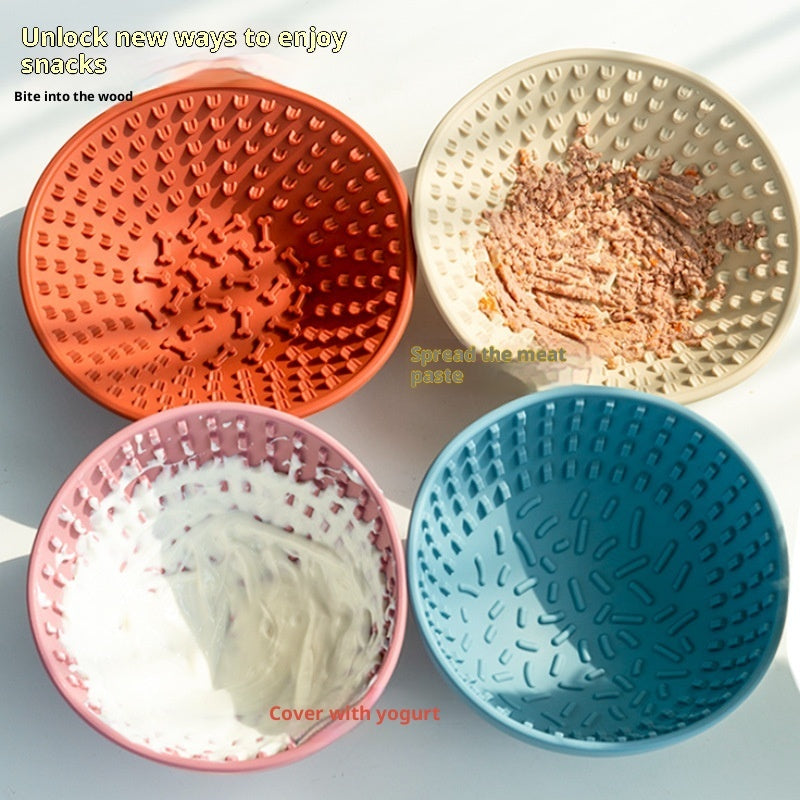
A lick mat is a useful companion here. You can see the kind of silicone lick mat for dogs we carry if you want a non-chew option alongside a chew toy.
How to Choose a Dog Chew Toy: A Step-by-Step Framework
Choosing a dog chew toy comes down to five checks: material, size, hardness, construction, and your dog's chewing style. Run every toy through these before you buy.
Here is the framework we use when selecting toys:
- Identify your dog's chewing strength. Light, moderate, or power chewer, based on how they treat their current toys.
- Match the material to that strength. Soft rubber for light chewers, dense rubber for moderate, tough rubber or nylon for power chewers.
- Check the size against your dog's mouth. The toy should be too big to swallow and small enough to grip.
- Inspect the construction. No loose parts, no weak seams, no thin walls.
- Confirm it suits your dog's life stage. Puppies, adults, and seniors have different needs.
The table below summarizes how the main toy types line up:
| Toy Type | Best For | Chewing Strength | Watch Out For |
|---|---|---|---|
| Soft rubber | Puppies, seniors | Light | Punctures easily |
| Dense rubber | Most adult dogs | Moderate | Can be too firm for seniors |
| Nylon | Power chewers | Heavy | Too hard for sensitive teeth |
| Rope and fabric | Gentle chewers | Light | Fraying and swallowing strands |
| Lick mats | All ages | None | Not a chew toy |
One more check most buyers skip: press a fingernail into the toy. If it gives easily, it is soft; if it barely dents, it is hard. That quick test tells you more than the packaging usually does.
Safe Dog Chew Toys: Materials, Supervision, and Replacement Rules
Safe dog chew toys are made from non-toxic materials, sized correctly, and used under supervision until you know how your dog treats them. No toy is truly indestructible, so safety depends as much on how you manage the toy as on how it is built.
Safety by life stage and chewing behavior
- Puppies and teething dogs. Soft rubber and textured toys give relief without hardness that can hurt tender gums. Avoid nylon and other hard materials until adult teeth are in, and supervise closely because puppy chewing is exploratory.
- Adult dogs. Match material to chewing strength. The main risk is a toy that is too hard for their teeth or too small for their mouth. Recheck size as toys wear.
- Senior dogs. Older dogs often have worn enamel, gum recession, or dental sensitivity, so softer, flexible toys are usually more comfortable than firm nylon. A senior dog that suddenly chews differently or drops toys may be signaling dental pain; a veterinary check is reasonable.
Chewable toys versus edible chews
Edible chews and chewable toys are not the same thing. Edible chews are designed to be consumed, so they carry choking and digestion risks that a rubber or nylon toy does not. A durable toy left down all day is normal; an edible chew usually needs supervision and a time limit. If your dog tends to gulp edible chews, choose a size and texture that forces slower chewing, or skip them in favor of a durable toy.
Material checks
Rubber and silicone should be firm but flexible, with no chemical smell. Nylon should be smooth, not sharp or splintered. Avoid any toy with small parts that can be pulled off, and skip toys harder than your dog's teeth can safely handle.
Supervision and replacement rules
- Watch the first few sessions. See how your dog chews before leaving them alone with a new toy.
- Remove worn toys immediately. A toy with a torn edge or exposed core is a hazard.
- Replace, do not repair. Glued or taped toys fail again quickly.
Cleaning and hygiene
Hollow and textured toys trap food residue, saliva, and odor, and that buildup can mask cracks. Wash rubber and silicone toys with warm water and mild dish soap, rinse thoroughly, and air dry completely. Check the manufacturer's instructions before dishwashing; heat and detergent can degrade some materials. Nylon can usually be scrubbed the same way, but inspect the surface afterward for new roughness.
Shopping HomeBodyPet for Toys Your Dog Won't Destroy
Shopping for durable chewable dog toys starts with honest expectations: the right toy for your dog's size, strength, and life stage, backed by a seller who will stand behind it.
We are a small, family-run operation. We hand-select and pet-test the durable essentials we carry, and we sell directly to you without retail markups.
If a toy does not hold up the way you expected, you are not stuck with it. You can read our full returns and refunds policy before you order, and browse our everyday pet essentials to see what else we carry for comfort and play.
Picking the right chew toy should not feel like a gamble every time.
Frequently Asked Questions
What is the best toy for a dog that chews everything?
There is no single best toy, but the closest match is a solid rubber toy sized so your dog cannot fit it fully in its mouth. Rubber flexes on impact, so it survives repeated biting better than hard plastic or thin fabric. Match the toy's firmness to your dog's chewing strength: a power chewer needs a thick-walled rubber toy, while a moderate chewer does fine with a softer one. Rotate two or three toys so no single one takes constant abuse, and inspect each one weekly for nicks and tears.
How do I choose the right size chew toy for my dog?
Buy the largest size your dog can comfortably carry, not the smallest it can fit in its mouth. A toy that is too small can be swallowed or wedged against the back teeth, which is a choking risk. As a rule, the toy should be wider than your dog's muzzle and long enough that it cannot disappear past the back molars. When in doubt between two sizes, go up. For small dogs, that still means a toy proportioned to their jaw, not a tiny one they could gulp down.
How often should I replace a dog's chew toy?
Replace any chewable dog toy as soon as you see a crack, a chunk missing, a tear at a seam, or a piece that comes off in your hand. For heavy chewers, check toys weekly by running a thumbnail along the surface and flexing the ends. Rubber toys that pass the test can last months; nylon toys that develop sharp edges should go immediately. There is no fixed calendar interval, because wear depends on chewing strength, so inspection matters more than a schedule.
Are rubber chew toys safe for dogs?
Rubber is one of the safer chew materials because it flexes instead of shattering, but safety depends on the grade and the dog. Look for non-toxic, food-grade rubber with no strong chemical smell, and avoid any toy your dog can tear into fragments. Supervise the first few sessions with a new toy so you can see how your dog works on it. Retire rubber toys that develop deep gouges, since bacteria collect in the crevices and the material weakens there.

