
Last Updated: November 25, 2026
Quick Summary
Interactive toys are built to make your dog think and move, while chew toys are built to take punishment from teeth, so heavy chewers generally benefit from both types in their rotation rather than one instead of the other. Use interactive toys for supervised, engaged time and chew toys for independent, alone time.
- A dog that only chews gets bored, and a dog that only plays gets destructive.
- Interactive toys fail when the mechanism breaks; chew toys fail when the material gives way.
- Reinforced rubber and nylon chew toys typically last one to six months with a heavy chewer.
- Budget by cost per month of use, not sticker price, since cheap toys get replaced constantly.
- Structure the day with an interactive morning session, a midday chew, and a calming evening activity.
Table of Contents
- Interactive Toys vs Chew Toys: The Core Difference
- Interactive Dog Toys for Aggressive Chewers: What Actually Survives
- Durable Chew Toys for Heavy Chewers: Materials That Hold Up
- Safe Dog Chew Toys for Aggressive Chewers: How to Judge Damage
- The Limits of Indestructible Toy Claims
- Matching Toys to Your Dog's Chewing Style and Play Behavior
- Realistic Cost and Lifespan: What You Actually Spend
- Building a Combined Play Routine That Keeps Heavy Chewers Busy
- Frequently Asked Questions
Interactive Toys vs Chew Toys: The Core Difference
The interactive toys vs chew toys for heavy chewers question comes down to purpose: interactive toys are built to make your dog think and move, while chew toys are built to take punishment from teeth.
American Kennel Club guidance on dog enrichment and play notes that mental stimulation tires a dog out as effectively as physical exercise. That matters most for power chewers, who tend to redirect pent-up energy into furniture when nothing else occupies them.
What Each Type Is Built to Do
Interactive dog toys are designed to engage a dog's brain: treat-dispensing puzzles, tug toys, and fetch toys that require the dog to solve something or work with you. Chew toys are designed to satisfy the natural urge to gnaw, made from materials chosen for durability rather than complexity.
The distinction matters because the two categories fail in different ways. An interactive toy fails when the mechanism breaks. A chew toy fails when the material gives way.
The Trade-Offs Nobody Puts in the Product Description
Interactive toys trade durability for engagement. A treat-dispensing puzzle has seams, moving parts, and compartments, all of which are failure points under a determined jaw.
Chew toys trade engagement for durability. A solid rubber or nylon chew has no mechanism to break, so its lifespan is limited only by material wear.
A useful rule of thumb: interactive toys are for supervised, engaged time, and chew toys are for independent, alone time.
Side-by-Side Comparison Table
| Feature | Interactive Toys | Chew Toys |
|---|---|---|
| Primary purpose | Mental stimulation, problem-solving | Satisfying the urge to gnaw |
| Typical materials | Rubber, tough plush, fabric, plastic | Rubber, nylon, reinforced nylon |
| Owner involvement | Often required | Usually independent |
| Failure mode | Mechanism or seams break | Material splits or chunks off |
| Best for | Boredom, training, high-energy dogs | Power chewers, alone-time enrichment |
| Supervision level | Active play, close watch | Moderate, check for damage |
| Typical lifespan with a heavy chewer | Weeks to a few months | One to six months, depending on material |
| Cost per month of use | Higher, because replacement is frequent | Lower, because lifespan is longer |
| Behavioral payoff | Reduces boredom-driven destruction | Redirects chewing urge away from furniture |
When to Choose Which
Choose an interactive toy first when your dog is destructive while you're home, that's usually boredom, not jaw drive. Choose a chew toy first when your dog is destructive while you're away, that's usually an unmet chewing urge. If both patterns show up, you're looking at a rotation problem, not a product problem, and the sections below walk through how to build that rotation.
Interactive Dog Toys for Aggressive Chewers: What Actually Survives
Most interactive toys are not built for aggressive chewers, and pretending otherwise wastes money.
Treat-dispensing toys molded from solid rubber hold up best. Tug toys made with ballistic fabric and reinforced stitching last longer than braided rope, which shreds under determined jaws.
For readers who want concrete picks rather than categories, our guide to the best toys for herding dogs compares food puzzles, tug toys, and herding balls side by side, with safety notes for high-drive dogs.
Watch out: a puzzle toy that's too easy gets chewed apart out of frustration. Match the difficulty to your dog, or you've handed them a destruction project.
Durable Chew Toys for Heavy Chewers: Materials That Hold Up
Material choice decides how long a chew toy lasts, and there's no universal winner. The right pick depends on how your dog chews, not on a label.
Rubber, Nylon, and Fabric Compared
- Rubber: Flexible and forgiving on teeth. Good for moderate chewers and for stuffing with treats. Softer rubber disappears fast under a determined power chewer.
- Nylon: The hardest common material. Outlasts most rubber, but it's abrasive, and heavy gnawing on hard nylon can wear tooth enamel over time.
- Reinforced nylon: Nylon with a tougher core or added texture. Longer-lasting than standard nylon, still hard on teeth.
- Ballistic fabric and tough plush: Good for tug and fetch, not for chewing. Fabric is a play material, not a chew material.
Harder isn't automatically better when dental wear is the trade-off. Rotate materials instead of relying on one.
Safe Dog Chew Toys for Aggressive Chewers: How to Judge Damage
Safe dog chew toys for aggressive chewers are the ones you inspect before every session, not the ones with the strongest marketing claims. Damage assessment is a skill, and it takes seconds once you know what to look for.
Check for these warning signs:
- Chunks or pieces missing from the surface
- Deep gouges where a tooth has dug in
- Cracks radiating from edges or seams
- Exposed inner material or core
- Loose or fraying fabric, rope, or stitching
- Any toy small enough to fit fully inside your dog's mouth
Retire a toy the moment it fails any check. A toy that's "still mostly intact" is a choking hazard waiting for the one session you look away.
The Limits of Indestructible Toy Claims
No chew toy is indestructible, and any product marketed that way is describing a spectrum, not a guarantee.
Treat "indestructible" as shorthand for "lasts longer than most." That reframing changes how you buy: you're shopping for lifespan relative to your dog's chewing strength, not for a permanent object.
The honest version of durability marketing tells you the material, the intended chew strength, and the replacement guidance. If a listing skips all three, that's your signal to keep looking.
Matching Toys to Your Dog's Chewing Style and Play Behavior
The right toy mix depends on two things: how your dog chews and how your dog plays. Answer those honestly and the shopping list writes itself.
Ask three questions. Does your dog destroy soft toys within minutes? Do they prefer solo gnawing or chasing and tugging with you? Do they get bored with a toy once the treats are gone?
If your dog is a solo destroyer, lean on durable chew toys and skip plush entirely.
For push-and-chase play specifically, our herding ball size and safety guide walks through choosing a ball your dog can move safely and introducing the game without over-arousal.
Realistic Cost and Lifespan: What You Actually Spend
Cheap toys are the most expensive option for heavy chewers, because they get replaced constantly. A toy that costs a few dollars and dies in a week costs more per month than a durable toy that lasts a season. But the math only helps if you know roughly how long each category actually lasts, and that's the number most buying guides skip.
Lifespan Benchmarks by Category
These are general working ranges, not guarantees. Your dog's jaw strength and chewing style will move the number up or down.
- Soft plush and fabric toys: Hours to a few days with a determined destroyer. Treat these as consumables, not investments.
- Standard rubber chew toys: Two to eight weeks for a heavy chewer. Softer rubber goes fast; thicker rubber lasts longer.
- Reinforced rubber and nylon chew toys: One to six months. Nylon tends to outlast rubber but is harder on teeth.
- Treat-dispensing puzzle toys: Weeks to a few months, and the failure point is usually the mechanism or seams rather than the body.
- Ballistic fabric tug toys: Months if used for tug only; days if the dog is allowed to lie down and gnaw on them.
The Cost-Per-Month Calculation
Budget by cost per month of use, not sticker price. A durable rubber chew toy that survives three months beats four cheap toys that each last two weeks.
Run the numbers on your own dog. If a $12 rubber chew lasts three weeks, that's roughly $17 per month. If a $25 reinforced chew lasts four months, that's roughly $6 per month, cheaper despite the higher sticker price.
Where the Money Actually Goes
Heavy-chewer owners often overspend in two places. First, they buy interactive toys that are too easy, the dog solves them in minutes, gets frustrated, and chews them apart, so the toy never delivers the engagement it was priced for. Second, they buy chew toys that are too hard, the dog loses interest, and the toy sits in the bin while the dog destroys something else.
The fix is to match difficulty and hardness to the dog, then replace on a schedule rather than on a surprise.
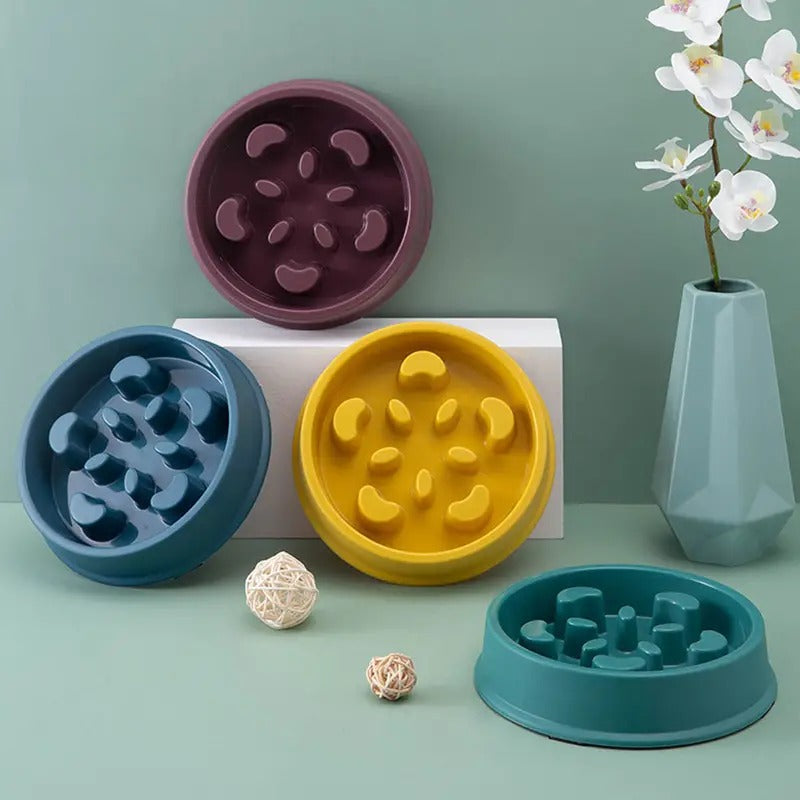
Our own line reflects that thinking. The Petal Slow Feeder Dog Bowl at $14.99 turns mealtime into enrichment for dogs that inhale their food.
Watch out: a toy that's still "mostly intact" can still be a choking hazard if a chunk has loosened.
Building a Combined Play Routine That Keeps Heavy Chewers Busy
A combined routine beats any single toy, because heavy chewers need both outlets: something to think about and something to gnaw. Structure the day around energy levels rather than scattering toys on the floor.
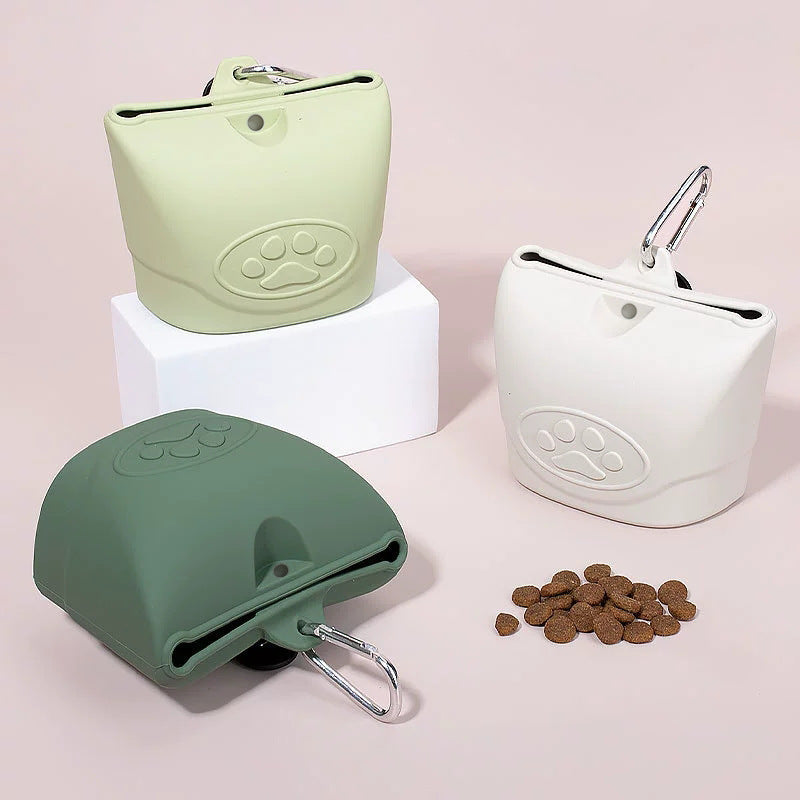
A workable pattern: an interactive session in the morning when energy is highest, a durable chew toy during the midday quiet, and a calming activity in the evening. A Silicone Dog Treat Pouch keeps rewards within reach for training and redirection during these sessions.
Watch out: don't leave a heavy chewer alone with a brand-new toy until you've seen how they treat that material.
Heavy chewers go through toys faster than any other dog, and guessing at durability gets expensive.
Frequently Asked Questions
What is the difference between interactive dog toys and chew toys?
Interactive toys are designed to engage your dog mentally through problem-solving, treat dispensing, or owner-led play like tugging and fetching. Chew toys are built for gnawing, made from tough materials like rubber or reinforced nylon to withstand sustained pressure. Heavy chewers usually need both: chew toys for solo stress relief and interactive toys for mental stimulation and bonding time.
What are the best interactive toys for aggressive chewers?
Look for interactive dog toys for aggressive chewers that combine thick rubber construction with a treat-dispensing or puzzle element. Stuffable rubber toys and durable treat-dispensing puzzles work well because the food reward keeps your dog engaged while the material resists tearing. Avoid anything with small plastic parts, fabric squeakers, or thin openings that a determined chewer can rip apart in minutes.
Can heavy chewers use treat-dispensing toys?
Yes, but choose carefully. Treat-dispensing toys for heavy chewers should be made from thick, bite-resistant rubber with no removable parts. Fill them with kibble or soft treats and freeze them for longer engagement. Check the toy after each session for cracks or bite marks, and replace it as soon as the surface shows deep gouges. Supervise the first few uses to see how your dog interacts with it.
How do I choose a safe dog chew toy for aggressive chewers?
Match the toy's size to your dog's mouth so it cannot be swallowed, and pick materials rated for power chewers such as rubber or reinforced nylon. Avoid toys with small pieces that can break off. Inspect toys weekly for cracks, missing chunks, or sharp edges, and remove damaged toys immediately. Always supervise chewing sessions, especially with new toys, and never give a toy that is smaller than your dog can safely carry.
Are there any plush toys for aggressive chewers?
Most plush toys are not built for aggressive chewers, but tough plush options with reinforced stitching and ballistic fabric exist. Even these have limits. Treat tough plush as a supervised, short-session toy rather than a solo chew outlet. If your dog shreds fabric quickly, stick to rubber or nylon chew toys for unsupervised time and save any plush play for interactive games with you.

