
Last Updated: November 21, 2026
Quick Summary
The best scent work games for small spaces need no yard or special equipment, just household items like muffin tins, cardboard boxes, towels, and treats. Start with easy games such as the muffin tin, box search, towel roll, pick a hand, scatter feeding, and lick mat, then keep sessions to 5 to 10 minutes.
- Scent work sessions should last 5 to 10 minutes for most dogs, and shorter for puppies or seniors.
- The muffin tin game uses a 12-cup tin and tennis balls and is the easiest entry point for beginners.
- A box search needs three to five cardboard boxes, and the boxes stack flat for storage.
- Change only one variable per session, such as visibility, height, distance, distractors, or scent age.
- If your dog stalls, reset to the last difficulty level it succeeded at and end the session there.
Table of Contents
- Why Scent Work Games Are Perfect for Small Spaces
- What You Need Before You Start Indoor Scent Games for Dogs
- 1. The Muffin Tin Game
- 2. Box Search: The Classic Beginner Setup
- 3. Towel Roll Hide and Seek
- 4. Pick a Hand: The Simplest Sniffing Games for Dogs DIY
- 5. Scatter Feeding in a Small Area
- 6. The Lick Mat Scent Challenge
- How Long Should a Scent Work Session Last for a Dog?
- Adding Difficulty as Your Dog Improves
- Making Scent Work Part of Your Daily Routine
- Frequently Asked Questions
Why Scent Work Games Are Perfect for Small Spaces
Scent work games turn a small apartment, a hallway, or a single room into a full training ground because they rely on a dog's nose rather than open floor space.
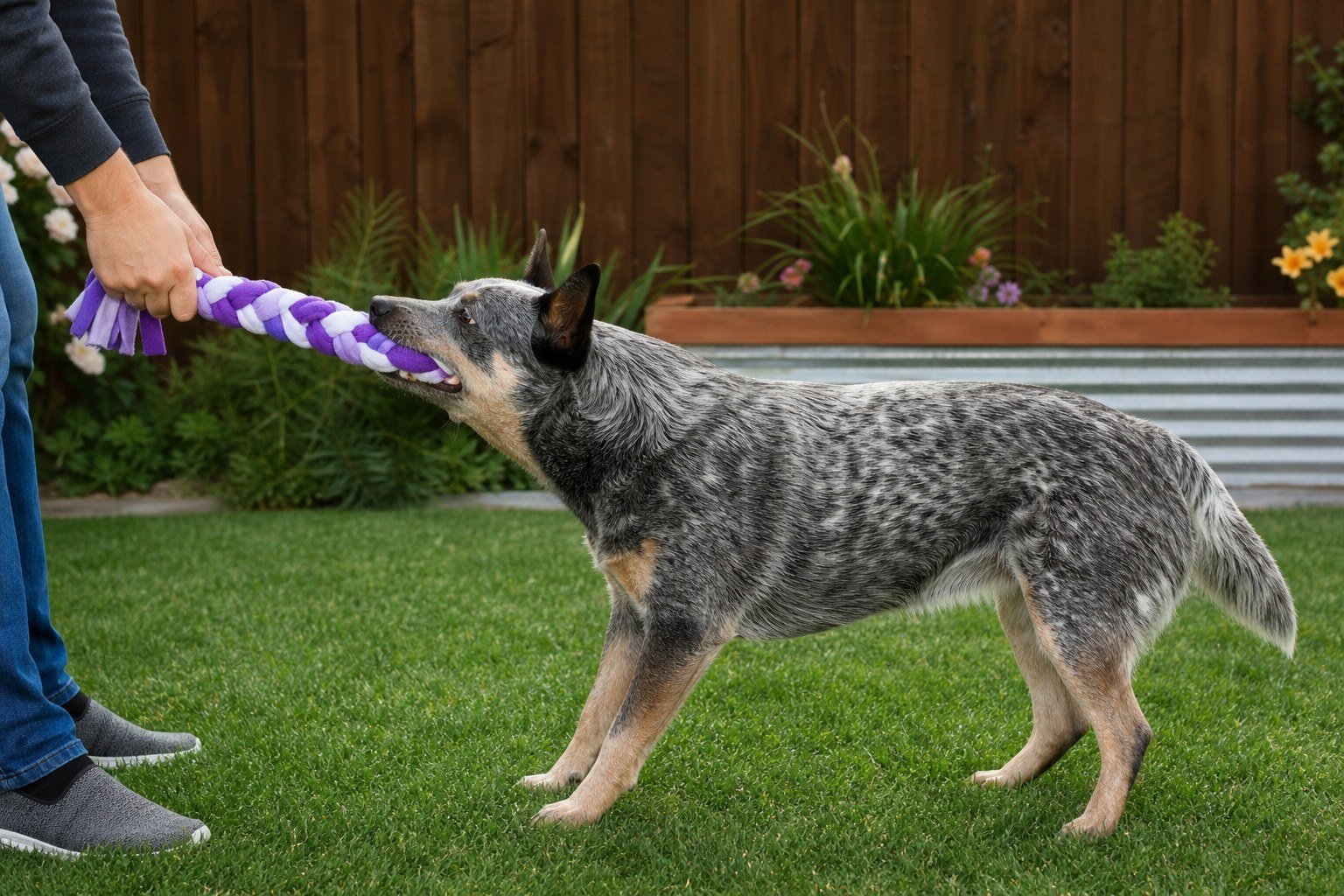
That is the appeal for compact homes: no yard or special equipment required, just household items and a dog that likes to sniff.
Indoor scent games for dogs are not just a rainy-day substitute for a walk.
Below are ten games we recommend, ordered from easiest to hardest, with the setup each one needs.
What You Need Before You Start Indoor Scent Games for Dogs
Before the first game, gather a few basics. None require a purchase, though a treat pouch makes rewards faster to deliver.
- High-value treats cut small, so your dog can swallow quickly and keep searching
- A release cue such as "find it" that marks the start of a search
- A reward cue such as "yes" or a clicker
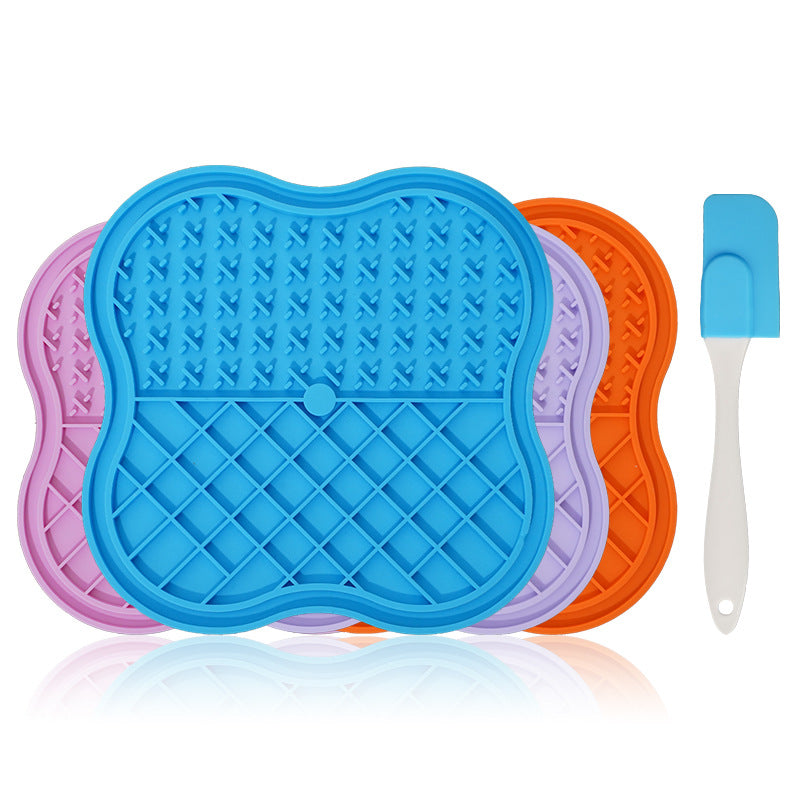
A dedicated treat pouch can be useful here. Our Silicone Dog Treat Pouch keeps rewards within reach so you can reward your dog without breaking the flow of the search.
Small-space setup requirements at a glance
In a compact home, the deciding factor is clear floor area, setup and cleanup time, and noise and mess. The table below gives realistic ranges for a dog up to about 25 pounds; scale up for larger dogs and down for toy breeds.
| Game | Clear floor area | Setup time | Cleanup | Noise / mess |
|---|---|---|---|---|
| Muffin tin | 2 ft x 2 ft | Under 1 minute | Rinse tin, collect balls | Balls roll and clatter |
| Box search | 3 ft x 3 ft | 1-2 minutes | Flatten boxes | Low |
| Towel roll | 2 ft x 3 ft | Under 1 minute | Shake out, launder towel | Low |
| Pick a hand | None, you stay seated | Seconds | None | None |
| Scatter feeding | 3 ft x 3 ft rug | Seconds | Vacuum crumbs | Crumbs on carpet |
| Lick mat | 1 ft x 1 ft | 1 minute to spread | Rinse or dishwasher | Sticky residue |
Use this to pick games by the room you actually have. A studio with one clear rug can run pick a hand, towel roll, and lick mat without moving furniture.
Confined-space safety checklist
Small rooms concentrate hazards that open yards do not. Run through this before every session:
- Swallowed containers: cut handles off paper bags and remove tape, staples, and plastic windows from boxes. A swallowed staple is a veterinary emergency.
- Unstable furniture: block off bookshelves, floor lamps, and anything a dog can knock over while nosing under it.
- Slippery floors: hardwood and tile give poor traction when a dog pivots to follow a scent. Put a rug or yoga mat down for the search zone, especially for older dogs.
Supervise every session. Scent work is a partnered activity, not a set-and-forget puzzle, and a dog left alone with a box search can shred cardboard fast.
Set one ground rule now: every session starts and ends with your dog working, not wandering. Keep sessions short, end on a success, and put the gear away so the games stay special.
1. The Muffin Tin Game
The muffin tin game is the easiest entry point into scent work for beginners.
Difficulty: Beginner What you need: A 12-cup muffin tin, tennis balls, small treats
Steps:
- Drop a treat into three or four cups.
- Cover every cup with a tennis ball, including the empty ones.
- Set the tin on the floor and give your release cue.
- Let your dog nudge and paw the balls aside to reach the treats.
- Refill and repeat two or three times, then stop.
Watch out: tennis balls can roll under furniture in a small room. Play against a wall or on a rug to keep them contained, and supervise so your dog does not chew the balls.
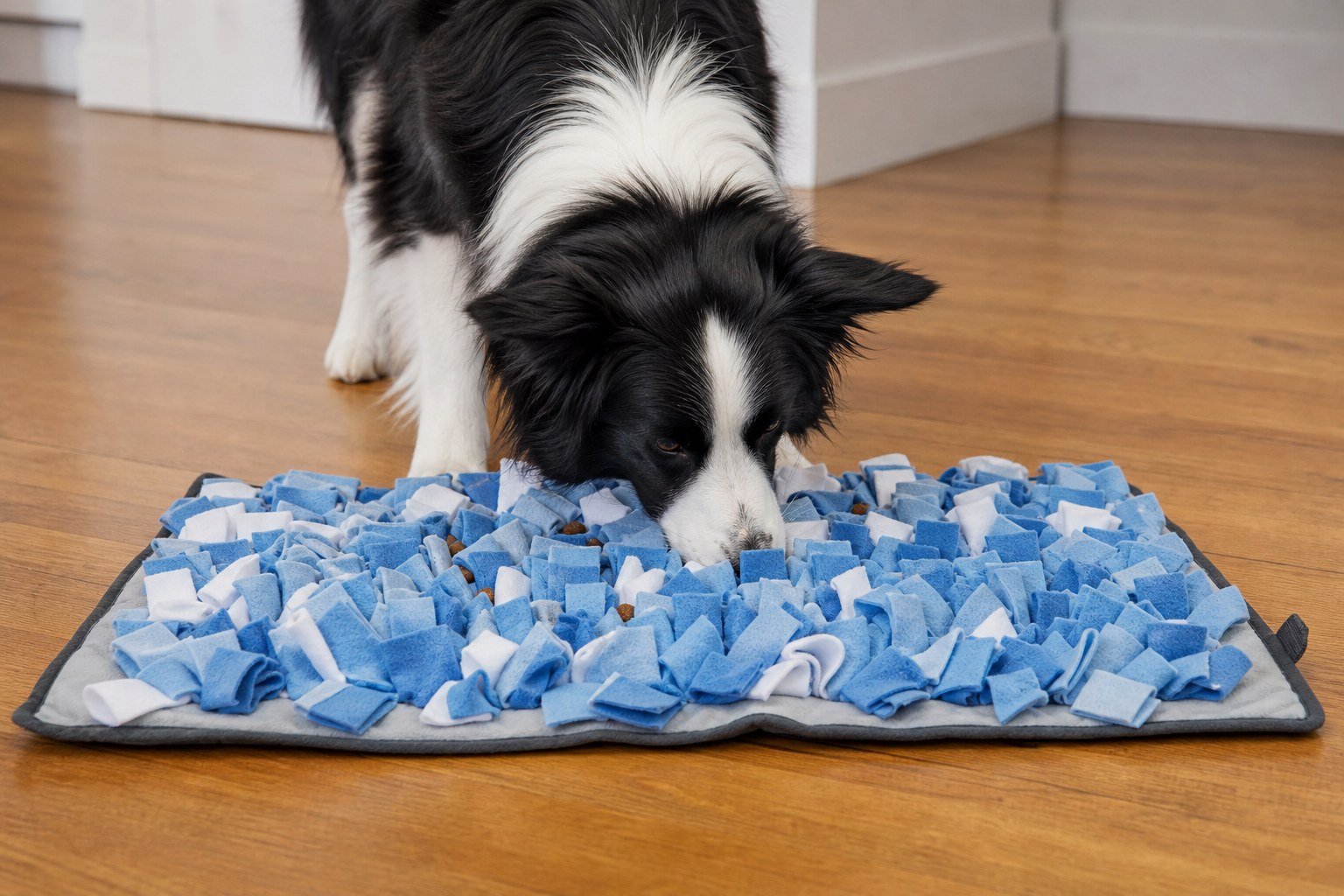
2. Box Search: The Classic Beginner Setup
A box search is the foundation of most nose work training. You arrange a few cardboard boxes, hide a treat in one, and let your dog search.
Difficulty: Beginner What you need: Three to five cardboard boxes, treats
Steps:
- Set out three boxes in a small cluster.
- Show your dog the treat, then hide it in one box while your dog waits.
- Release with "find it" and let your dog work the boxes.
- Reward the moment your dog's nose reaches the right box.
- Add a fourth or fifth box as your dog gets confident.
The boxes stack flat for storage, which makes this game a natural fit for small spaces. Our Silicone Dog Treat Pouch, Easy-Clean Training Bag has a magnetic closure for one-handed access.
3. Towel Roll Hide and Seek
Towel roll hide and seek is a quiet, low-mess game that works in a single room. You roll treats inside a towel and let your dog unroll it to find the food.
Difficulty: Beginner to intermediate What you need: One or two hand towels, small treats
Steps:
- Lay a towel flat and scatter a few treats across it.
- Roll the towel loosely from one end.
- Tuck the ends in slightly to make it a puzzle.
- Present the roll and give your release cue.
- Let your dog paw, nose, and unroll until the treats appear.
Increase difficulty by rolling the towel tighter or nesting one roll inside another. Start loose, rolling too tight on the first try frustrates a beginner dog.
4. Pick a Hand: The Simplest Sniffing Games for Dogs DIY
Pick a hand is the fastest sniffing game for dogs DIY owners can set up with nothing but a treat. You hide a treat in one closed fist and let your dog choose.
Difficulty: Beginner What you need: One small treat
Steps:
- Show your dog a treat, then close it in one fist.
- Present both fists side by side at your dog's nose height.
- Wait for your dog to nose or paw the correct hand.
- Open the hand and reward immediately.
- Switch hands and repeat a few times per session.
This game teaches scent discrimination in the smallest possible space and makes a good warm-up before a box search.
5. Scatter Feeding in a Small Area
Scatter feeding is the lowest-effort scent game on this list. You toss kibble or treats across a small patch of floor and let your dog hunt for each piece.
Difficulty: Beginner What you need: Kibble or small treats
Steps:
- Measure out a portion of your dog's meal or a handful of treats.
- Scatter it across a rug or a defined patch of floor.
- Release your dog to search.
- Let your dog work until the floor is clean.
This turns a fast eater's meal into a slow, focused search. Our Dog Slow Feeder Bowl uses a maze pattern designed to encourage slower eating. Keep the scatter zone consistent so your dog does not hunt the whole house.
6. The Lick Mat Scent Challenge
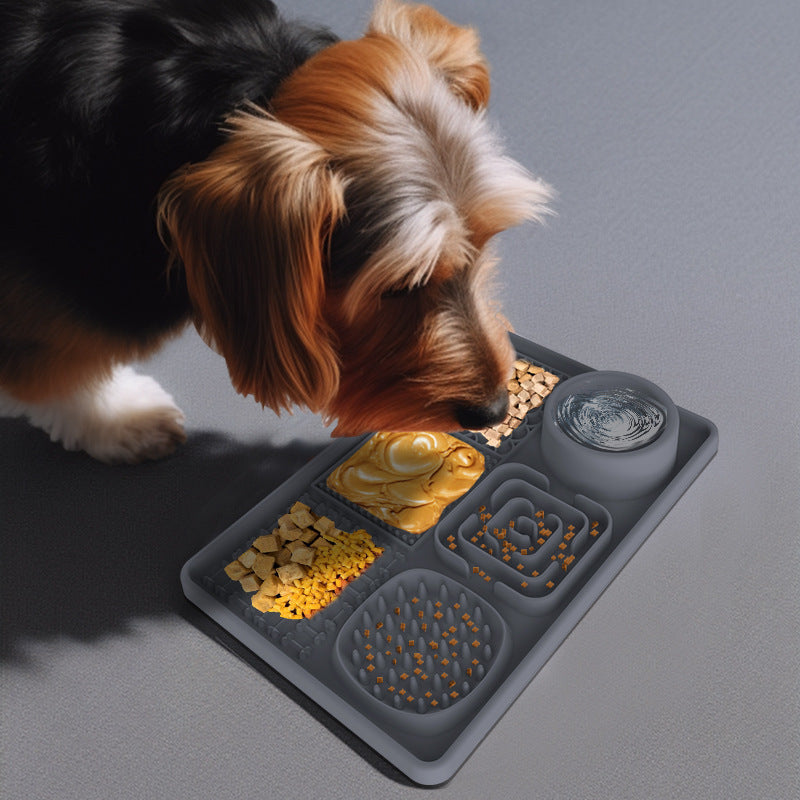
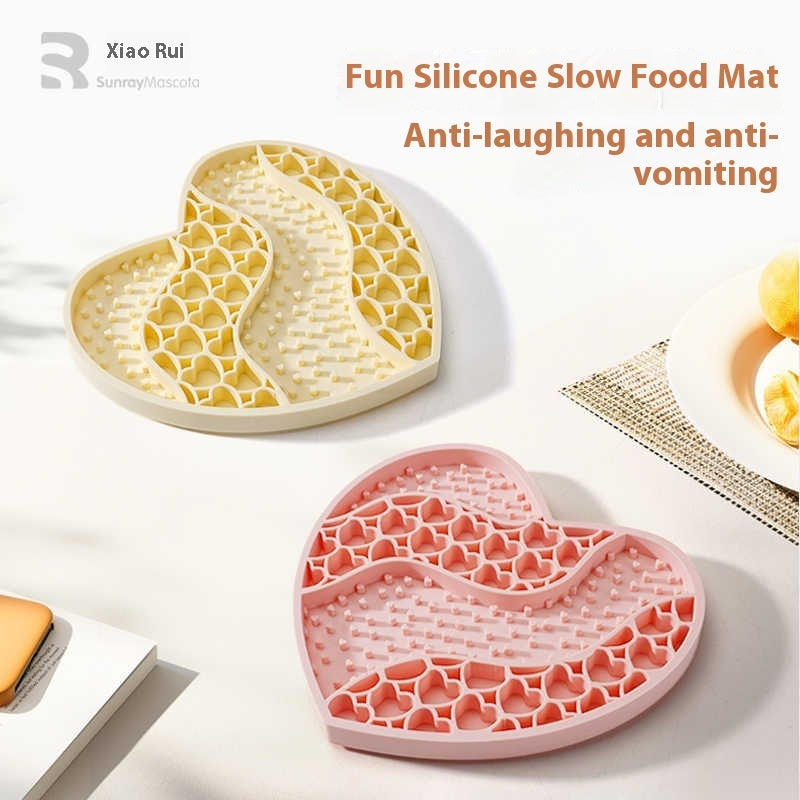
The lick mat scent challenge combines licking and sniffing into one calm, contained activity. You spread a thin layer of soft food across a textured mat and let your dog work it clean.
Difficulty: Beginner What you need: A lick mat, wet food, plain yogurt, or a pet-safe spread
Steps:
- Spread a thin layer of soft food across the mat's grooves.
- Add a few small treats pressed into the texture for extra searching.
- Set the mat on the floor and release your dog.
- Let your dog lick and nose the surface until clean.
- Freeze the mat for a longer session on hot days.
Two lick mat styles are available. Our Dog Slow Feeder Mat comes in square and rectangular shapes with a textured surface for spreading food. Our Silicone Dog Licking Mat is made from silicone for everyday treat sessions.
Watch out: check any spread for xylitol, which is toxic to dogs (the FDA).
How Long Should a Scent Work Session Last for a Dog?
A scent work session should last 5 to 10 minutes for most dogs, and shorter for puppies or seniors. Stop while your dog is still eager, not when it loses interest.
Watch for signs of fatigue: slower searching, sniffing the air instead of the ground, wandering off, or lying down. Two short sessions a day beat one long one, especially in a small space.
Adding Difficulty as Your Dog Improves
Once your dog masters the beginner games, raise the challenge gradually. The mistake most owners make is changing too many variables at once, a new room, a new container, and a higher hide in the same session, so the dog fails and the game stops being fun. Change one variable per session.
The five difficulty dials
Every scent game on this list gets harder or easier by adjusting the same five things:
- Visibility, treat in the open, then partially covered, then fully hidden.
- Height, floor level first, then chair-seat height, then table height. Keep hides at or below your dog's nose level until the dog is reliably finding floor hides.
- Distance from handler, start with the hide within arm's reach, then move it across the room while your dog waits out of sight.
- Number of distractors, one box with a treat, then five boxes with one treat, then five boxes with a decoy (an empty box that smells like a previous hide).
- Scent age, a treat hidden 10 seconds ago is easy; one hidden 5 minutes before the search is harder because the scent has spread.
A progression plan that fits a small space
| Stage | Games to use | Session length | What changes | Move on when… |
|---|---|---|---|---|
| Week 1-2 | Muffin tin, pick a hand | 3-5 minutes | Treats visible, easy finds | Dog finds the right cup or hand on 4 of 5 tries |
| Week 3-4 | Box search, towel roll | 5-7 minutes | More boxes, tighter rolls | Dog works boxes without pawing them over |
| Week 5-6 | Scatter feeding, lick mat | 7-10 minutes | Hides behind furniture | Dog searches systematically instead of randomly |
| Week 7+ | Combined searches | 10 minutes | Multiple hides per session | Dog finds 3 hides in under 5 minutes |
Session length
In a small space, the easiest way to add difficulty without adding floor area is to add distractor scent. Put an empty box that held treats yesterday into the search cluster. A dog that has been finding food by smell alone will check it, learn it is empty, and move on, that is scent discrimination.
Non-food scent work for variety
Treats are the easiest reward to start with, but they are not the only option. Once your dog understands the game, you can build scent discrimination with non-food targets:
- Birch or clove scent is the standard starting odor in organized nose work; a single cotton swab scented with a drop of essential oil, sealed in a tin with holes punched in the lid, becomes the target. Keep the tin closed between sessions and store it away from food.
- A toy your dog loves can be the hidden object instead of a treat, with the reward delivered from your hand when the dog finds it.
- A scent pair, two identical tins, one scented and one blank, teaches the dog to choose the target rather than the nearest interesting smell.
Watch out: essential oils are concentrated, and some, including tea tree, pennyroyal, and wintergreen, are toxic to dogs (Essential Oils Are Toxic to Dogs). Check with your veterinarian before using any scent, and never apply oil to the dog or the floor.
When to back off
If your dog stalls, sniffing the air, checking the same empty box repeatedly, or walking away, the hide is too hard. Reset to the last difficulty level the dog succeeded at, run one easy rep to rebuild confidence, and end the session there. Puppies need shorter, easier sessions. Seniors and dogs with mobility limits do better with floor-level hides and no jumping.
Making Scent Work Part of Your Daily Routine
The best scent work games are the ones you actually play.
Start with one game this week. If you want gear that makes the routine simpler, browse our everyday pet essentials for treat pouches, lick mats, and slow feeders built for real home use.
Small spaces do not limit a dog's need to sniff and search. They just change where the game happens.
Frequently Asked Questions
What household items can I use for DIY scent work games for dogs?
You can use muffin tins, cardboard boxes, towel rolls, paper cups, and old newspapers. Tennis balls work well for covering treats in a muffin tin, and a silicone lick mat can hold a scented spread for a calming search. A treat pouch keeps rewards handy during the session. Avoid anything with sharp edges, small parts that can be swallowed, or toxic materials. Rotate items to keep the games fresh and your dog engaged.
Are scent work games good mental exercise for dogs?
Yes. Sniffing engages a dog's natural foraging instinct and provides mental stimulation that can tire them out faster than physical exercise alone. Scent games can be mentally tiring for some dogs and may provide enrichment during the day. They are especially useful for high-energy dogs or those who cannot exercise vigorously due to age or injury.
How do I make indoor scent games harder for my dog?
Increase difficulty by hiding treats in less obvious spots, using multiple search areas, or introducing a target scent on a cotton swab. You can also add distractions like a closed door or a low obstacle. For advanced dogs, try scent discrimination with identical containers where only one holds the treat. Always progress gradually and end on a success to keep the game fun and build confidence.
What scents are safe to use for dog scent work?
Safe options include food rewards like freeze-dried treats, kibble, or a tiny amount of peanut butter (without xylitol). Non-food scents such as birch, anise, or clove are used in formal nose work, but introduce them on a cotton swab and supervise. Avoid essential oils, which can be toxic to dogs. Always check with your vet before introducing a new scent, and never use anything your dog might ingest.
How long should a scent work session last for a dog?
Keep sessions short and positive, especially for beginners. Start with 3-5 minutes for puppies and 5-10 minutes for adult dogs. Watch for signs of fatigue like losing interest, sniffing the floor aimlessly, or lying down. End while your dog is still eager. Multiple short sessions per day are better than one long one. For seniors or dogs with health issues, consult your vet and keep sessions to 3-5 minutes.

