
Last Updated: November 19, 2026
Quick Summary
Dog enrichment means giving your dog daily outlets for natural behaviors like sniffing, foraging, chewing, chasing, and problem-solving. A well-rounded plan covers five types: food-based, sensory, cognitive, physical, and social enrichment. Ten to twenty minutes of focused cognitive work plus a sniff walk is a realistic daily baseline for most households.
- A silicone lick mat or maze slow feeder turns a fast meal into ten minutes of mental work.
- DIY enrichment should use food-safe materials like plain cardboard, paper towels, cotton towels, silicone, and hard rubber.
- Freeze a stuffed lick mat the night before to give your dog a plan while you are at work.
- Match activities to the dog: puppies need short supervised sessions, while seniors do better with lick mats and gentle sniffing.
- Food-based enrichment counts toward your dog's daily calorie allowance, so measure the day's kibble and split it across activities.
Table of Contents
- Why Enrichment Matters More Than You Think
- Food-Based Enrichment: Making Mealtime Work for Your Dog
- Dog Enrichment Ideas DIY: Simple Projects Using What You Already Have
- Enrichment Activities for Dogs Indoors: Keeping Busy Bodies Engaged
- Dog Enrichment Ideas While at Work: Leaving Your Dog with a Plan
- Dog Enrichment Ideas Without Food: Non-Food Ways to Tire Your Dog
- Matching Enrichment to Your Dog's Age, Health, and Energy Level
- Building Your Enrichment Rotation and Knowing It's Working
- Frequently Asked Questions
Why Enrichment Matters More Than You Think
A dog who shreds the sofa cushion isn't being naughty. That dog is bored, and boredom in dogs looks a lot like destruction. Dog enrichment ideas exist to solve that problem at its root, and at HomeBodyPet we've watched enough pet parents wrestle with chewed baseboards to know the difference between a tired dog and a mentally satisfied one.
Enrichment is the practice of giving dogs outlets for the natural behaviors they were born to perform: sniffing, foraging, chewing, chasing, and solving problems. A walk around the block satisfies none of those. A walk with a job to do satisfies all of them.
Enrichment isn't a treat you hand out when you feel guilty. It's a daily need, like water.
The Five Types of Enrichment Every Dog Needs
Think of enrichment as five buckets, and a well-rounded week touches every one:
- Food-based: puzzle feeders, lick mats, scatter feeding
- Sensory: sniffing games, scent work, new textures and surfaces
- Cognitive: problem-solving toys, training games, clicker work
- Physical: chasing, tugging, structured play
- Social: time with you, other dogs, or calm companionship
A dog who only gets physical exercise is fit but unfulfilled. A dog who gets all five is calm, confident, and far less likely to redecorate your living room.
Food-Based Enrichment: Making Mealtime Work for Your Dog
Food is the easiest enrichment lever you own, because your dog already cares about it. Instead of a bowl that's empty in forty seconds, you can turn every meal into ten minutes of sniffing, licking, and problem-solving.
Start simple. Spread wet food or plain yogurt across a textured surface and let your dog work at it. A silicone dog licking mat does exactly this. If your dog gulps food fast enough to worry you, a maze-style slow feeder bowl adds mental work to the meal and slows the pace.
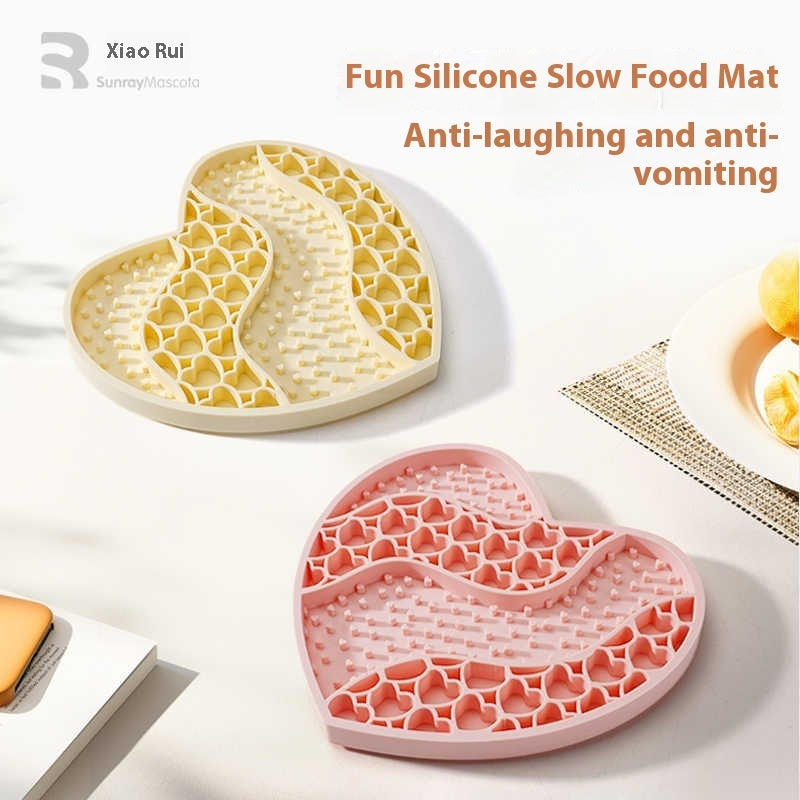
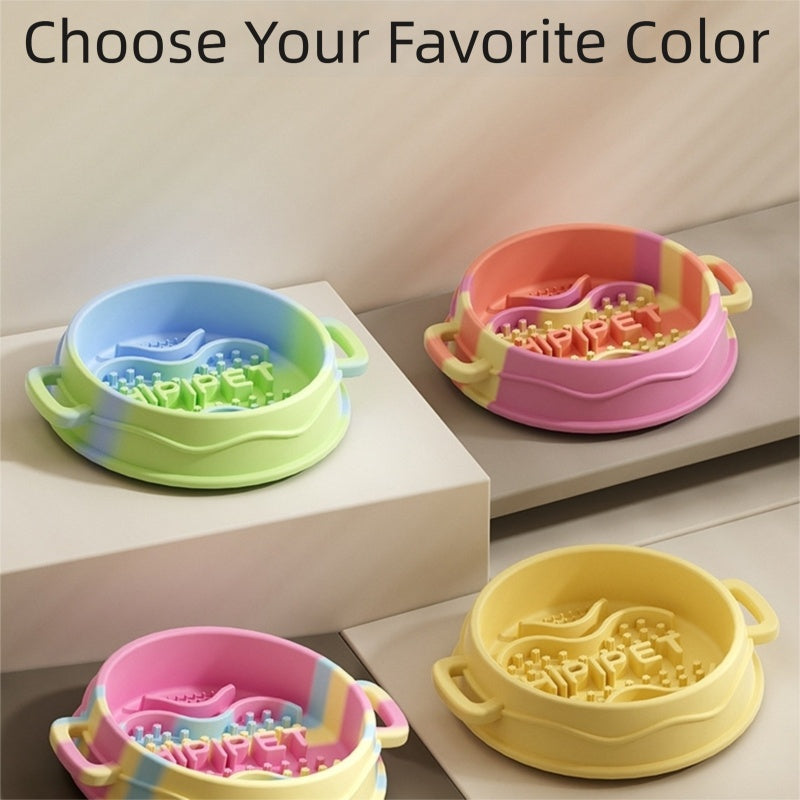
Watch out: never leave a food toy with a dog who tends to swallow large pieces whole, and always supervise the first few sessions.
Sniffing, Foraging, and Scatter Feeding
Sniffing is the most underrated enrichment activity there is. A dog's nose does more cognitive work in ten minutes of sniffing than in an hour of trotting beside you.
Try these:
- Scatter feeding: toss kibble across a lawn or a snuffle mat and let your dog hunt
- Find it: hide treats around a room and cue "find it"
- Treat trail: drag a treat along the floor to leave a scent path
- Muffin tin game: drop treats into a muffin tin and cover some cups with tennis balls
These cost nothing and tap directly into foraging, one of the strongest natural drives a dog has.
Dog Enrichment Ideas DIY: Simple Projects Using What You Already Have
Dog enrichment ideas DIY are where the fun starts, because your recycling bin is a toy store. The rule is simple: cheap, safe, and supervised.
Start with projects that fail safe. Tape a few boxes shut with treats inside and let your dog shred, but remove all tape, staples, and shipping labels first.
A muffin tin puzzle is the classic entry-level DIY: treats in the cups, tennis balls on top. It can teach problem-solving, provided the tennis balls are too large to swallow and your dog isn't a determined ball destroyer.
What separates a safe DIY session from a risky one is supervision and material choice. Food-safe materials include plain cardboard, paper towels, cotton towels, silicone, and hard rubber. A common mistake is using tape, staples, or plastic your dog could swallow.
A second mistake is overcomplicating the build. The best DIY enrichment is usually the simplest object your dog can manipulate with nose and paws.
Enrichment Activities for Dogs Indoors: Keeping Busy Bodies Engaged
Indoor enrichment activities for dogs indoors work best when you combine movement with thinking. Rainy days, heat waves, and recovery periods all call for a backup plan.
Build a simple indoor circuit: a puzzle toy in one room, a lick mat in another, and a short training session in the hallway. Rotate the order so the challenge stays fresh. For high-energy dogs who need more than a puzzle, our guide on how to tire out a high-energy dog indoors goes deeper into structured indoor play.
The goal isn't exhaustion. It's a dog who settles afterward because their brain got a workout.
Dog Enrichment Ideas While at Work: Leaving Your Dog with a Plan
Dog enrichment ideas while at work depend on preparation. The dog who has something to do at 10 a.m. is the dog who isn't howling at the mail carrier.
Before you leave:
- Freeze a stuffed lick mat the night before
- Hide a few treats around the house for a morning hunt
- Leave one puzzle toy out, not five
- Keep a canvas treat pouch stocked so you can stage activities quickly
Rotate toys weekly. A toy that disappears for a few days becomes new again when it returns, and novelty is half the value.
Dog Enrichment Ideas Without Food: Non-Food Ways to Tire Your Dog
Dog enrichment ideas without food matter for dogs on restricted diets, dogs who gain weight easily, and dogs who simply need variety. Plenty of enrichment has nothing to do with eating.
- Scent work: hide a scented item and reward your dog for finding it
- Training games: teach a new trick in five-minute sessions
- Tug and fetch: structured, with clear start and stop cues
- Novel surfaces: let your dog walk on grass, sand, or a wobble board
- Social time: a calm visit with a dog friend counts
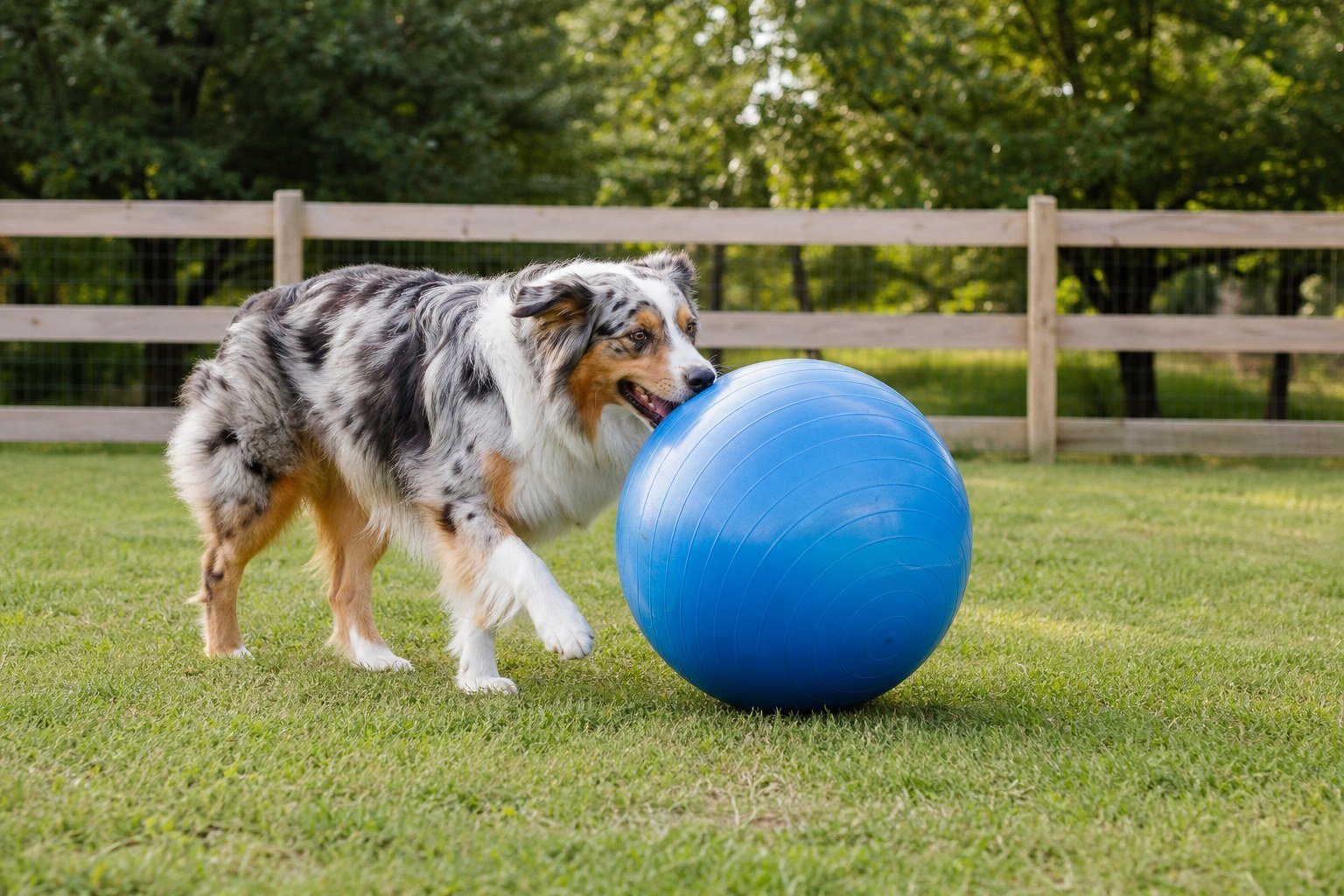
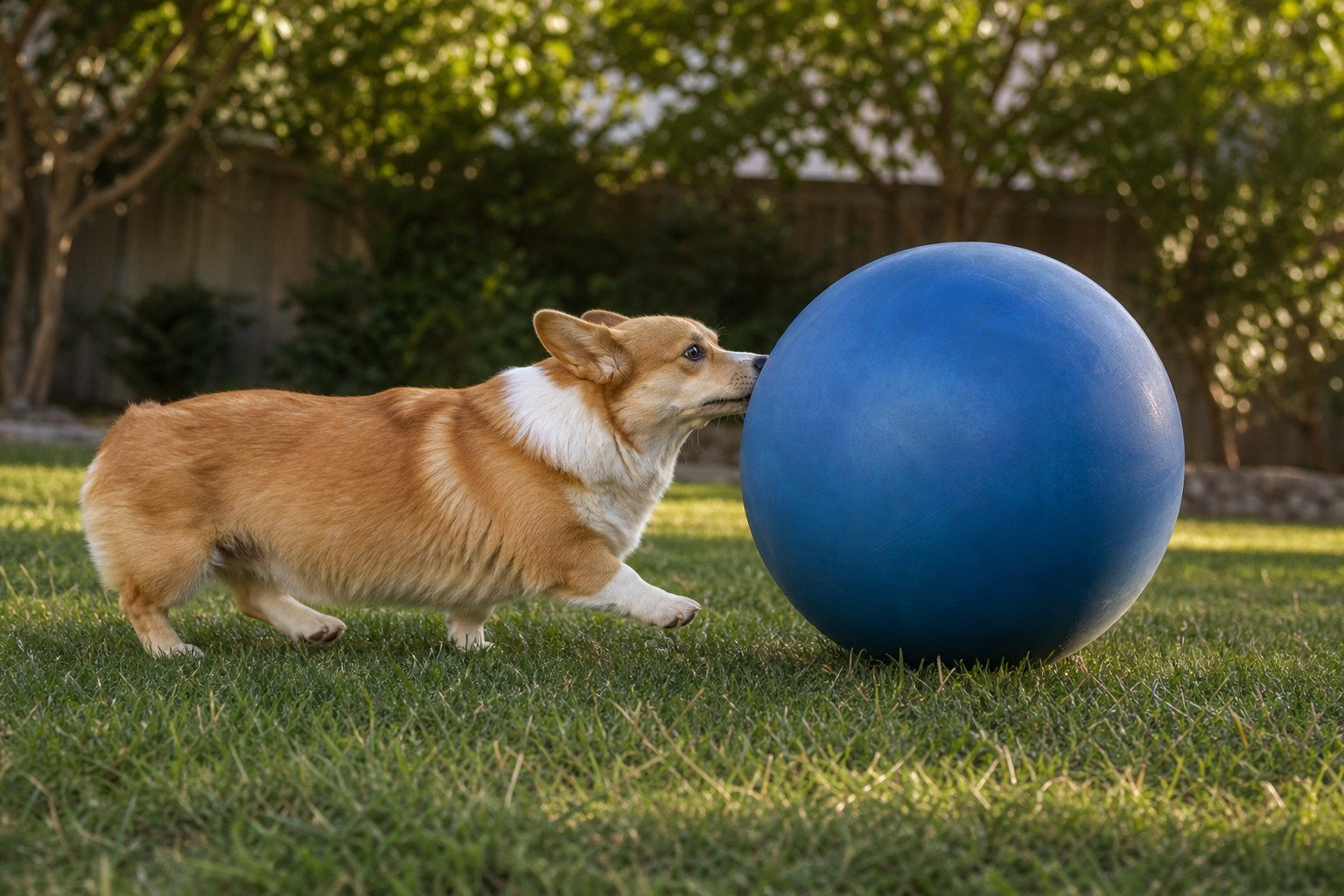
Chasing and playing are enrichment too. A herding ball rolled across a yard gives a working breed exactly the outlet it was bred for.
Matching Enrichment to Your Dog's Age, Health, and Energy Level
The right enrichment for a puppy is wrong for a senior with joint issues. Match the activity to the dog, not the other way around.
- Puppies: short sessions, soft textures, lots of supervision
- High-energy breeds: scent work, herding balls, long foraging sessions
- Seniors: lick mats, gentle sniffing, low-impact puzzles
- Injured or post-surgery dogs: food-based and scent games only, with your vet's guidance
For active herding breeds, our guide to choosing a herding ball for Border Collies covers sizing and safety checks. And if you're juggling a senior and a young husky in one house, that's normal: pick activities each dog can do safely rather than forcing one plan on both.
Building Your Enrichment Rotation and Knowing It's Working
A rotation beats a pile of toys every time. Here's a simple weekly structure:
| Day | Activity Type | Duration | Notes |
|---|---|---|---|
| Monday | Food puzzle | 15 min | Freeze the night before |
| Tuesday | Sniff walk | 20 min | Let the dog lead |
| Wednesday | Training game | 10 min | New trick |
| Thursday | DIY box shred | 15 min | Supervised |
| Friday | Lick mat calm-down | 10 min | After exercise |
| Weekend | Outdoor exploration | 30+ min | New place |
What most guides skip is the accounting behind that table. Food-based enrichment should come out of your dog's daily calorie allowance, not sit on top of it.
Duration matters as much as type. Ten to twenty minutes of focused cognitive work can tire a dog out, and stacking several activities back to back can leave a dog over-aroused rather than satisfied. One substantial activity per day, plus a sniff walk, is a realistic baseline for most households.
How do you know it's working? Watch for engagement signs: a relaxed tail, a dog who returns to the activity after a pause, and a dog who settles within ten to fifteen minutes of finishing.
A well-enriched dog settles faster after activity, greets you with less frantic energy, and stops rehearsing the behaviors you dislike. If destruction continues, the answer is usually more sniffing and problem-solving, not more miles walked.
Boredom is the real enemy here, and it's one you can outmaneuver with a plan.
Frequently Asked Questions
What are the five types of dog enrichment?
The five types are food-based (puzzles, scatter feeding), sensory (sniffing, scent games), physical (chewing, chasing, play), cognitive (problem-solving toys, training games), and social (interaction with people or other dogs). A balanced enrichment routine draws from all five categories. Most dogs do well with a mix of two or three types daily, rotating the specific activities so nothing becomes boring. Food-based and sensory enrichment are the easiest to start with because they use items you already have.
How much enrichment does a dog need each day?
Most dogs benefit from 20 to 60 minutes of structured enrichment daily, split into two or three short sessions. High-energy or working breeds often need closer to 60 minutes, while senior or low-energy dogs may be satisfied with 15 to 20 minutes. The goal is mental tiredness, not just physical exertion. A 10-minute sniffing session can tire a dog as much as a 30-minute walk. Watch for signs like settling quickly after activity or losing interest in toys as clues you have hit the right amount.
How do I mentally stimulate my dog indoors?
Indoor enrichment activities for dogs include puzzle toys stuffed with kibble, snuffle mats, hide-and-seek with treats, cardboard box destruction, and training games like teaching new tricks. Rotate toys every few days so they stay novel. You can also scatter kibble across a towel or muffin tin for a quick foraging game. Short sessions of 5 to 10 minutes work well, and you can repeat them throughout the day. The key is variety and making your dog work for the reward.
How do I enrich my dog's day while I'm at work?
Prepare enrichment before you leave: a frozen lick mat, a stuffed puzzle toy, or a snuffle mat with kibble scattered through it. Rotate which item you leave out so your dog does not get bored with the same thing daily. A treat trail hidden around the house gives your dog something to find during the day. If you can, schedule a midday walk or a quick play session. Leaving a radio on low can also help dogs who are unsettled by quiet. The goal is giving your dog something to do, not just something to chew.
What enrichment activities can I do with my dog without food?
Non-food enrichment includes scent games using a favorite toy instead of treats, tug-of-war, fetch, hide-and-seek with a person, cardboard box play, and training new tricks or commands. You can also teach your dog to find a specific toy by name. Physical activities like a game of chase in the yard or a flirt pole session work well. For dogs who are food-motivated but on a diet, using a portion of their regular kibble as enrichment rewards keeps calories in check.
What is the 7-7-7 rule for dogs?
The 7-7-7 rule is a guideline for newly adopted dogs: 7 days to decompress, 7 weeks to settle into a routine, and 7 months to feel fully at home. During the first week, keep enrichment low-key, such as a lick mat or a quiet sniffing game, to avoid overwhelming your dog. As your dog settles, you can introduce more variety. The rule is not a strict timeline, but it helps set realistic expectations for how long adjustment takes.

