Table of Contents
- Why Dogs Chew and What Is Normal
- Signs of Anxious Chewing in Dogs
- Dog Boredom vs Anxiety Chewing: How to Tell the Difference
- Observing Your Dog When You Are Gone
- Choosing a Dog Chewing Deterrent and Safe Chew Options
- When to See a Veterinarian or Behaviorist
- Frequently Asked Questions
Last Updated: November 17, 2026
Why Dogs Chew and What Is Normal
Chewing is a normal part of being a dog. Puppies chew to ease teething pain, and adult dogs chew to clean their teeth, explore objects, and relieve boredom. Most chewing is harmless. The trouble starts when chewing becomes destructive, targets household items, or happens only when you leave.
Many pet owners ask the same question: is my dog chewing because something is wrong, or because it is just being a dog? Learning how to tell if dog chewing is anxiety depends on the pattern, the timing, and what else you notice.
Normal chewing usually looks like this:
- Happens while you are home and the dog is awake
- Focuses on the dog's own chew toys
- Stops easily when you redirect the dog
- Does not come with other stress signs
Watch out: Puppies often chew everything they can reach. This is normal exploration, but it still needs supervision and appropriate chew toys so the puppy does not swallow pieces.
Signs of Anxious Chewing in Dogs
Anxious chewing tends to show up with other signs of distress, so knowing how to tell if dog chewing is anxiety means looking beyond the chewing itself. Chewing alone does not prove anxiety. Look for a combination of these behaviors:
- Chewing that starts when you pick up keys, put on shoes, or grab a bag
- Targeting items that smell like you, such as shoes, pillows, or clothing
- Pacing, whining, or barking while you are gone
- Panting or drooling that does not match the temperature or activity level
- Chewing that is hard to interrupt, even with a treat or a toy
- Chewing at doors, windows, or crates
- Accidents in the house when the dog is usually reliably housetrained
A single sign is rarely enough to diagnose anxiety. Several signs together, especially around departures, point more strongly toward stress.
Dog Boredom vs Anxiety Chewing: How to Tell the Difference
Boredom and anxiety can look alike, but the details differ. Boredom chewing is usually opportunistic. The dog finds something to chew because nothing else is happening.
| Feature | Likely Boredom | Likely Anxiety |
|---|---|---|
| Timing | Any time nothing else is happening | Around departures or when alone |
| Target | Random items, often within reach | Owner-scented or household items |
| Other signs | Usually none | Pacing, whining, panting, drooling |
| Response to redirection | Usually stops with a new toy | Hard to interrupt |
Ask yourself whether the dog chews more when it has been left with little exercise, play, or company. Boredom often improves with more activity. Anxiety often does not improve just because the dog got a walk.
Observing Your Dog When You Are Gone
The most useful evidence comes from watching your dog when you are not there. Many owners cannot see this on their own, so a simple setup helps.
Set up a safe recording routine
- Place a pet camera or phone on a stable surface in the room where the dog spends time alone. Keep cords and the device itself out of reach.
- Record short sessions at different times of day, especially the first 10 to 15 minutes after you leave and the period just before you return.
- Leave the room as you normally would. Do not stage a dramatic exit or a longer absence than usual just to test the dog.
- Review the footage the same day, while details are fresh.
Use an observation checklist
For each session, note yes or no for these items:
- Did chewing begin within the first 15 minutes of departure?
- What was chewed, and where was it found? Owner-scented items such as shoes, pillows, or clothing are a common pattern in separation-related distress.
- Did the dog target doors, window frames, or crate bars?
- Could the dog be interrupted by a treat or toy left in the recording area?
- Did the dog pace, whine, bark, pant, or drool when alone?
- Did the dog settle within about 30 minutes, or stay restless the whole time?
- Were there house-training accidents in a dog that is otherwise reliable?
- Did the dog greet you at the door in an overly frantic way, or take a long time to calm down after you returned?
Turn the checklist into a simple decision guide
- Chewing that happens mainly when alone, targets owner-scented items or exits, and comes with pacing, whining, or drooling points toward separation-related distress. This is a pattern to discuss with a veterinarian or behavior consultant, not a label to apply on your own.
- Chewing that happens at any time, targets random objects, and stops easily when the dog is offered a toy points more toward boredom or exploratory chewing.
- Chewing that is sudden, targets food bowls or toys in an unusual way, or comes with drooling, dropping food, or bad breath may have a medical or dental component. A veterinary check is the right next step.
- Chewing that happens mostly during teething, in a puppy that is otherwise playful and eating normally, is usually normal exploration that still needs supervision.
Keep a behavior log
Write down the date, how long you were gone, what the dog chewed, whether the dog was alone or someone was home, and any other behavior you saw.
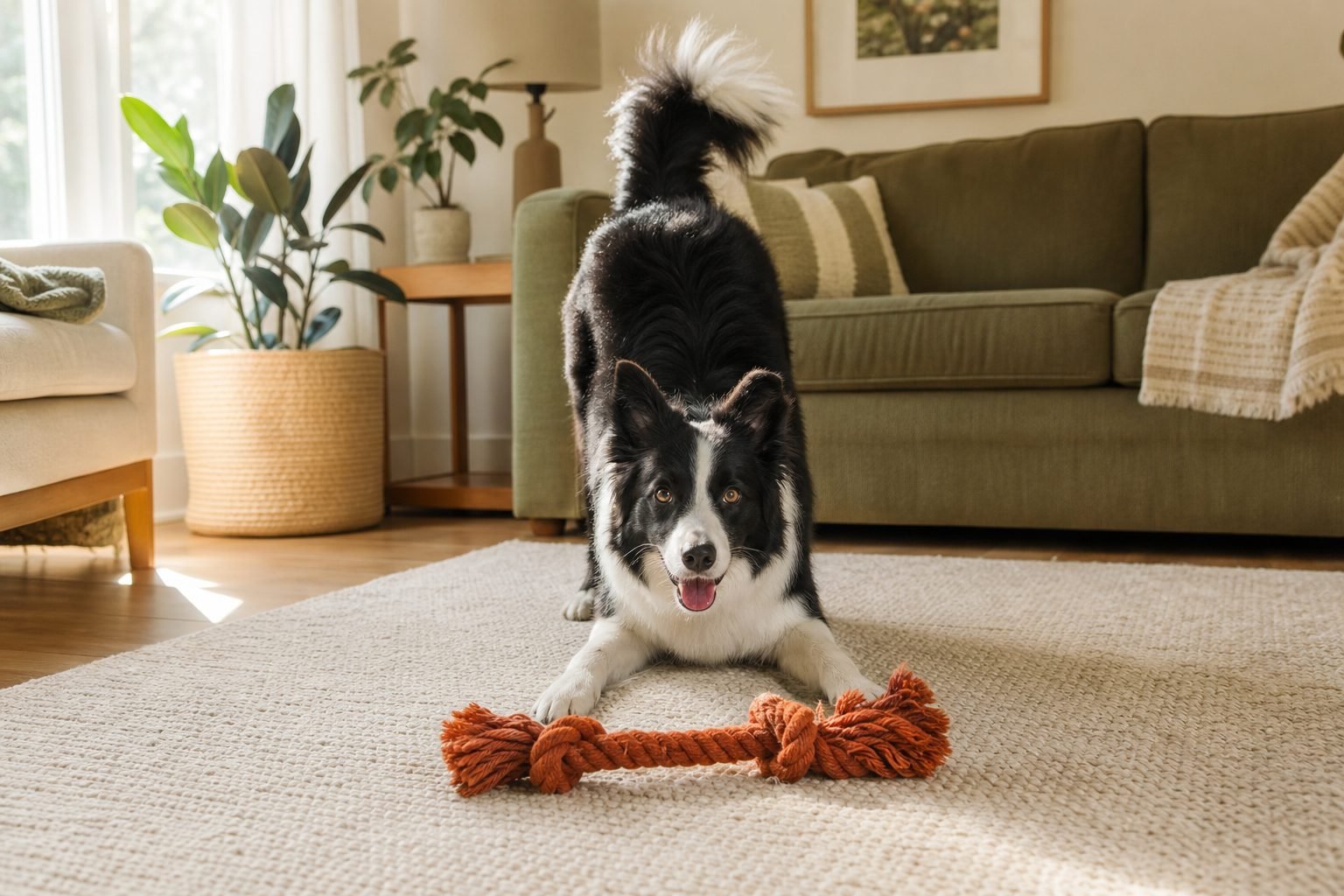
Hint: A calm home interior with a dog resting on a bed near a chewed-looking chew toy, afternoon light through a window.
Note: Current prices and options for products like this are on the HomeBodyPet website, and pricing depends on quantity, dates, and delivery.
Also consider an automatic feeder for routines during longer days out. A steady schedule can reduce some of the stress that comes from uncertainty.
Choosing a Dog Chewing Deterrent and Safe Chew Options
Deterrent sprays and bitter products can stop some dogs from chewing a specific item. They do nothing for the underlying stress, and some dogs find the taste or smell unpleasant without changing behavior.
Match the chew to the dog
- Choose a chew sized for your dog so pieces cannot be swallowed whole. A chew that is too small is a choking hazard; one that is too large may be ignored.
- Pick durable materials that do not splinter. Very hard chews can crack teeth, especially in older dogs or dogs with existing dental wear.
- Match the chew to your dog's chewing style. Gentle chewers do well with softer rubber or rope; heavy chewers need tougher rubber designed for power chewers.
- Rotate toys every few days so the dog stays interested, and inspect chews for cracks, missing pieces, or frayed ends before each use.
Know the ingestion risks
Chewing becomes urgent when pieces are swallowed. Common problems include choking, blockages, and splinters or shards that can injure the mouth or digestive tract. Warning signs that need urgent veterinary care include:
- Gagging, retching, or difficulty breathing
- Repeated vomiting or a bloated abdomen
- Drooling that will not stop, or pawing at the mouth
- Blood in the stool or vomit
- A dog that stops eating or seems painful when swallowing
Watch out: Rope toys and stuffed chews can be swallowed in strands or chunks.
Use enrichment to reduce the need to chew the house
A stuffed food toy, a slow feeder, or a licking mat gives a dog a calm task and can slow restless chewing during short absences. For a dedicated enrichment option, see this cat tree tower for pets that need a place to climb and occupy themselves. A cooling mat for dogs and cats can make a rest area more comfortable on warm days.


Common mistake: Buying the hardest chew available. Very hard chews can crack teeth. Choose a chew that matches your dog's size and chewing strength, and put it away when the dog is done rather than leaving it out all day.
When to See a Veterinarian or Behaviorist
Some chewing has causes that a training change will not fix. See a veterinarian if you notice:
- Sudden chewing in a dog that never chewed before
- Pain when chewing, bleeding gums, or broken teeth
- Swallowed objects, vomiting, or changes in appetite or bowel habits
- Chewing that causes injury, such as to the mouth, paws, or crate
- Signs of illness, such as weight loss, lethargy, or drinking much more water
A veterinarian can check for dental disease, pain, or medical conditions that may drive chewing. If anxiety is likely, a veterinary behaviorist or certified behavior consultant can build a plan with you. Medication is sometimes part of treatment, but only a veterinarian can decide that.
Seek urgent care if your dog has swallowed something it should not have, or if the dog seems to be in severe distress.
If you are working through this and want tools to keep your dog occupied, HomeBodyPet offers hand-selected pet essentials, including the Flower Cat Tree Tower for cat households and the Ice Silk Cooling Pet Mat for resting areas. Shop the collection on the HomeBodyPet website to find options that fit your routine.
Frequently Asked Questions
How can I tell if my dog chews because of anxiety or boredom?
Look at when and where the chewing happens. Boredom chewing tends to occur when a dog has unused energy and is often in a busy household, and it usually stops when the dog is given exercise, play or a puzzle. Anxiety chewing tends to happen during or just before you leave, focuses on items with your scent, and often comes with other signs such as pacing, drooling, whining, panting or scratching at doors. If the chewing stops when you are home, or when the dog is given enrichment, boredom is more likely. If it continues despite enrichment and appears tied to your departures, anxiety is more likely, and a veterinarian or certified behaviorist can help confirm it.
Does chewing when left alone mean my dog has separation anxiety?
Not always. Chewing while alone can come from separation anxiety, but it can also come from boredom, under-stimulation or a dog that has learned chewing is rewarding. Separation anxiety is more likely when the dog shows distress before you leave, such as following you from room to room, panting, drooling or trying to escape confinement, and when the chewing is intense and focused on exits or items carrying your scent. Recording your dog while you are away can help you see what happens during the first minutes after you leave and whether the dog settles.
What should I do if my dog chews things when I'm gone?
Start by making the environment safer and removing items your dog should not have. Confine the dog to a space with appropriate chew toys, and provide exercise and mental stimulation before you leave. Rotate toys so they stay interesting, and use a chew deterrent spray on furniture or cords. Build alone-time gradually with short departures, and avoid dramatic goodbyes. If the chewing is intense, causes injury, or continues despite these steps, talk with your veterinarian about a behavior plan. Pricing for HomeBodyPet products depends on quantity, dates and delivery, so check the website for current prices or a quote.
When should I contact a veterinarian about my dog's chewing?
Contact a veterinarian promptly if chewing is sudden or new, if your dog shows signs of pain, such as reluctance to eat, drooling, mouth pawing or bleeding gums, or if you suspect your dog swallowed a piece of an object. Sudden destructive chewing can also relate to medical or dental problems, so a physical exam is a reasonable first step. Seek urgent care if your dog shows signs of choking, vomiting, lethargy or blockage, such as straining to pass stool.

