
Last Updated: November 9, 2026
Quick Summary
Dog toy rotation means keeping only three to five toys out at a time and swapping them on a set schedule, usually every three to seven days. Sort toys by function, store the rest out of sight, and swap sets on a fixed day to keep novelty and engagement high.
- Three to five toys at a time is the sweet spot for most dogs.
- A simple weekly swap works for most dogs; high-energy dogs may need a swap every few days.
- Group toys by function: chew, puzzle, fetch, and comfort.
- Puppies in teething windows often need a swap every two to three days.
- Inspect toys weekly and always before a toy returns to the rotation.
Table of Contents
- Why Dog Toy Rotation Works for Engagement
- How to Build a Dog Toy Rotation Schedule
- How Often to Rotate Dog Toys
- How Many Toys Should a Dog Have Out?
- Categorizing Toys by Type and Function
- Age-Specific Rotation Strategies
- Dog Enrichment Ideas That Go Beyond Rotation
- Safety Inspection and Toy Maintenance Protocol
- Frequently Asked Questions
Why Dog Toy Rotation Works for Engagement
Dog toy rotation is the practice of keeping only a few toys available at a time and swapping them out on a set schedule. Novelty drives engagement. When the same toy sits on the floor for weeks, it fades into the background like furniture. When it disappears and returns later, it feels new again. That small cycle of change keeps playtime interesting and gives your dog a reason to re-engage.
The Science of Novelty and Mental Stimulation
Dogs explore the world nose-first. Their olfactory system tells them far more about an object than their eyes do, so a toy that smells "new" again after a break gets a fresh round of sniffing, mouthing, and problem-solving. Mental stimulation works like exercise for the brain. Puzzle feeders, snuffle mats, and chew toys all ask your dog to think, and thinking tires a dog out in a good way.
Signs Your Dog Is Bored With Their Toys
Boredom shows up in behavior, not in a dog's face. Watch for these signals:
- Toys left untouched for days despite being in plain view
- Chewing furniture, shoes, or baseboards instead of toys
- Pacing, whining, or nudging you constantly in the evening
- Digging at carpets or scratching at doors
That last one is the clearest sign. If novelty wears off fast, your dog needs a swap cycle, not more toys. Many owners buy more when the real fix is rotating what they already own.
How to Build a Dog Toy Rotation Schedule
Building a dog toy rotation schedule takes about twenty minutes and a couple of storage bins. Start by gathering every toy in the house and sorting them into groups by type.
Here is one way to set it up:
- Collect all toys and toss anything cracked, torn, or unsafe
- Group toys by function: chew, puzzle, fetch, comfort
- Split each group into two or three sets
- Put one set out and store the rest out of sight
- Pick a swap day and stick to it
- Wash stored toys before they return
Keep the bins somewhere your dog cannot reach. A closet shelf or a lidded storage bin works well. Out of sight matters, because a toy your dog can see but cannot reach loses its "new" feeling fast.
How Often to Rotate Dog Toys
Most dogs do well with a swap every three to seven days, but the right interval is a decision you make from your dog's behavior, not a calendar. Instead of guessing, use a simple observation loop: put out a fresh set, note how long your dog actively engages with each toy, and swap when interest drops below a threshold you set. A common pattern is that engagement holds for two to three days in high-drive dogs and five to seven days in calm adults. If toys sit untouched for a full day while other toys are available, that set is done.
Here is a practical framework for setting your interval:
- Start with a seven-day swap for one month and log daily engagement (active play versus ignored).
- If engagement falls off before day four, shorten the cycle by one day and repeat.
- If your dog is still working a puzzle feeder or chew on day seven, extend by one day.
- Stabilize at the longest interval that keeps daily engagement high; that is your baseline.
Watch out: shortening the cycle too aggressively can backfire. If you swap every day, each toy never gets deep engagement, and your dog learns to wait for the next novelty instead of settling into play.
Life stage and drive shift the baseline. Puppies in teething windows often need a swap every two to three days because their mouths are uncomfortable and attention spans are short.
Season and routine matter too. Rainy weeks with fewer walks often call for a shorter cycle because indoor boredom rises.
How Many Toys Should a Dog Have Out?
Three to five toys at a time is the sweet spot for most dogs. That count gives your dog real choices without turning the floor into clutter. Too many toys out at once creates the same problem as too few: nothing stands out, so nothing gets played with. A common mistake is leaving the entire toy basket on the floor and wondering why the dog ignores all of it. Pull the basket, keep a small handful available, and let the rest rest in storage. For puppies, lean toward three toys and rotate more often.
Categorizing Toys by Type and Function
Sorting toys by function makes rotation easier and helps you spot gaps. We group toys into four loose types:
| Toy Type | Job | Examples |
|---|---|---|
| Chew toys | Satisfy gnawing, ease teething | Durable rubber chews, nylon bones |
| Puzzle feeders | Slow eating, build problem-solving | Kibble-stuffed toys, slow feeder mats |
| Fetch and tug toys | Burn energy, build play drive | Balls, rope tugs, herding balls |
| Comfort toys | Calm, soothe, support rest | Plush toys, soft blankets |
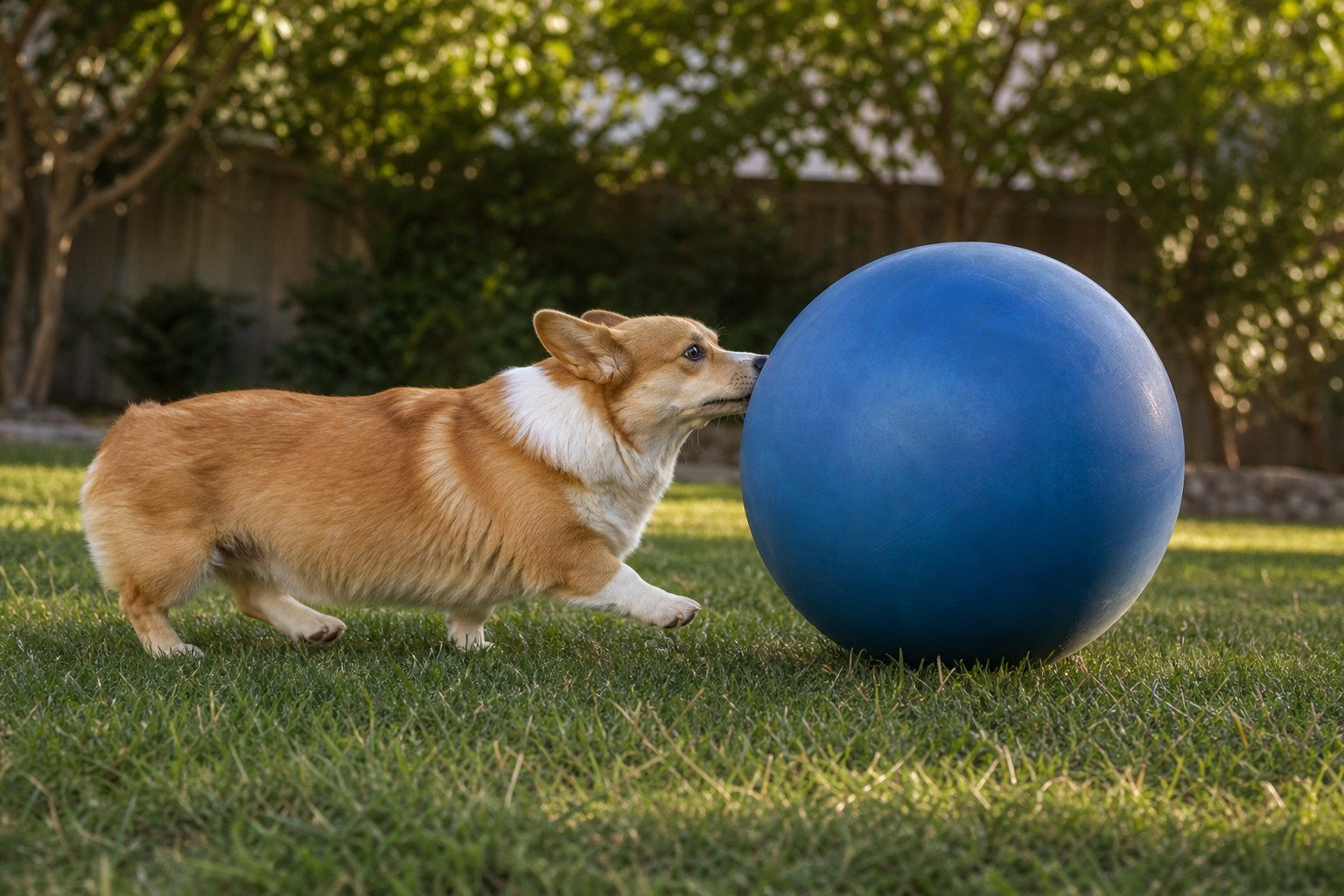
A slow feeder mat belongs in the puzzle group because it turns mealtime into a thinking task. If you want to see how a food-dispensing toy fits the rotation, our Dog Slow Feeder Mat is built for exactly that job. Herding breeds need a different outlet, and our guide to toys for herding dogs covers purposeful play for high-drive dogs. For a closer look at one specific option, see our notes on the herding ball for Corgi.

Power Chewer Tips and Durable Toy Selection
Power chewers blow through soft toys in minutes. For these dogs, build the rotation around durable rubber toys and skip plush entirely, or save plush for supervised comfort time only. Check every toy for cracks and missing chunks before it goes back out. When a chew toy starts to break down, retire it. A strong chewer can swallow pieces, and that is a vet visit waiting to happen.
Age-Specific Rotation Strategies
Most rotation advice treats every dog the same, but a puppy, a prime-age athlete, and a senior with arthritis need different toy sets, different swap intervals, and different safety checks. Tailoring by life stage is the single biggest upgrade you can make to a rotation plan, and it is where generic guides fall short.
Puppies: Teething and Short Attention Spans
Puppies explore with their mouths, and teething discomfort peaks between roughly three and seven months. Build each set around three toys: one soft textured chew for sore gums, one durable rubber chew for supervised gnawing, and one easy puzzle feeder or snuffle mat for mental work. Swap every two to three days because attention spans are short and novelty drives learning. Avoid rope toys and plush with plastic squeakers until you know your puppy's chewing style; loose threads and squeaker parts are common choking hazards.
Adults: Drive and Purpose
Adult dogs vary widely by breed and drive. High-drive herding and working breeds need at least one fetch or tug toy and one puzzle feeder in every set, swapped every three to four days. Lower-drive companion breeds do well with four to five toys and a weekly swap. The key adjustment for adults is matching toy function to energy outlet: a dog that herds needs a ball or herding ball, a retriever needs fetch toys, and a scent hound needs nose-work puzzles.
Seniors: Comfort, Mobility, and Shorter Sessions
Senior dogs often have joint pain, reduced vision, or dental issues. Favor soft, low-impact toys, flat snuffle mats, and lick mats that can be used while lying down. Skip high-bounce balls and vigorous tug games if mobility is limited. Swap every seven to ten days, and keep one consistent comfort toy out at all times; seniors often find security in a familiar item, and removing it entirely can cause stress.
Multi-Dog Homes
If you have a puppy and a senior, or two dogs with different drives, run separate bins and separate swap days. One shared bin means the higher-drive dog monopolizes the good toys and the lower-drive dog gets leftovers. Label bins by dog and store them out of reach. This also lets you customize safety checks: the puppy bin gets seam checks, the senior bin gets a comfort-toy inventory.
Dog Enrichment Ideas That Go Beyond Rotation
Rotation is the foundation, but it is not the whole plan. Sensory play adds variety rotation alone cannot provide. For calm, independent enrichment, our textured silicone lick mat spreads a thin layer of wet food for a slow, soothing treat session. If you want a second option for variety, our silicone dog licking mat works the same way with a different texture.


Integrating Rotation With Training and Independent Play
Use rotation to support training, not just play. Keep a high-value toy in reserve and bring it out only for training sessions. That toy becomes a reward, and the swap cycle keeps it powerful. For independent play, leave a puzzle feeder out when you head to work. Your dog gets a job to do while you are gone. Reward-based play works best: when your dog engages with a toy, praise or treat it.
Safety Inspection and Toy Maintenance Protocol
Inspect toys weekly, and always before a toy returns to the rotation. Run this checklist:
- Check seams and stitching for tears
- Squeeze chew toys for cracks or soft spots
- Look for missing squeakers or stuffing
- Rinse and dry toys that hold food or treats
- Retire any toy with loose pieces or sharp edges
Sanitization matters most for puzzle feeders and lick mats, since food residue builds up in the crevices. Wash them after every use with warm water and pet-safe soap. The ASPCA's pet care guidance is a solid reference for spotting hazards around the home.
Toy rotation only works if the toys themselves hold up. Our small, family-run operation hand-selects and pet-tests durable essentials, delivered directly to you without retail markups.
Frequently Asked Questions
What is the 4 toy rule for dogs?
The 4 toy rule is a simple guideline that keeps four toys out at once: one chew toy, one puzzle or interactive toy, one comfort plush, and one tug or fetch toy. The rest go into storage and swap back in later. This limit preserves novelty, makes it easier to spot damage during a quick daily check, and keeps the toy basket from becoming a pile your dog ignores. Adjust the number for your dog's energy level and chewing habits.
How often should you rotate your dog's toys?
Most dogs do well with a swap every three to seven days. High-energy working breeds and puppies may need a fresh set every two to three days, while senior dogs often stay engaged with a weekly change. Watch for signs like walking past toys without a sniff or chewing furniture instead. If interest drops before the scheduled swap, rotate sooner. The goal is to bring toys back before your dog decides they are boring.
Can rotating dog toys reduce boredom and destructive behavior?
Yes. Rotating toys restores novelty, which triggers curiosity and engagement the same way a new scent does. A dog with interesting, rotating options is less likely to redirect energy into chewing shoes, digging, or barking. Pair rotation with puzzle feeders and snuffle mats for variety. If destructive behavior continues despite a solid rotation and daily exercise, talk with your veterinarian, since boredom is not always the only cause.
How do you rotate dog toys without buying new ones?
You do not need to buy anything. Divide your current toys into two or three sets, store the inactive sets out of sight in a closed bin, and swap them on a schedule. Wash plush toys and rinse rubber toys before they return to rotation so they feel and smell different. You can also rotate by location, keeping one set in a different room or in the car for hikes. This keeps the dog toy rotation schedule free while still feeling new.

