
Last Updated: November 7, 2026
Quick Summary
Yes, scatter feeding is good for dogs in most cases. It means tossing your dog's kibble across a lawn, floor, or snuffle mat instead of serving it in a bowl, so the dog has to hunt for each piece. It is one of the lowest-cost enrichment tools you can use, since it works with food you already own.
- Start with one meal a week, then build to two or three as your dog learns the game.
- Scatter five to ten pieces on a hard floor in week one, keeping sessions under one minute.
- Sniffing and searching provide mental stimulation that can tire a dog out in a way a walk sometimes cannot.
- No feeding method is proven to prevent bloat, so treat bloat as a medical emergency requiring a vet.
- In multi-dog homes, feed each dog in its own space or scatter in separate rooms to prevent guarding.
Table of Contents
- Is Scatter Feeding Good for Dogs? The Short Answer
- How to Scatter Feed a Dog: A Step-by-Step Setup
- Scatter Feeding Benefits for Dogs: What It Actually Does
- Scatter Feeding Games for Dogs That Keep Mealtime Interesting
- Slow Feeding Ideas for Dogs When Scattering Isn't Practical
- Safety, Suitability, and Multi-Dog Households
- Portion Control: Keeping Scatter Feeding From Adding Calories
- Pick Your Bowl and Start Scattering Tonight
- Frequently Asked Questions
Is Scatter Feeding Good for Dogs? The Short Answer
Yes, scatter feeding is good for dogs in most cases. Scatter feeding is the practice of tossing your dog's kibble across a lawn, floor, or snuffle mat instead of serving it in a bowl, so the dog has to hunt for each piece. It is one of the lowest-cost enrichment tools you can use, since it works with food you already own.
Here is the honest version, though: it is good for the right dog in the right setting. A food-motivated retriever on a quiet lawn? Excellent. A resource-guarding dog in a busy park? Risky. Below, we will show you exactly how to set it up, who it suits, and where the health claims get shaky.
The setup steps below are simple to learn and need no special equipment.
How to Scatter Feed a Dog: A Step-by-Step Setup
Start with a small area and a small handful of food. The goal is a quick win, not a perfect system. Most dogs need three to five short sessions to understand the game, and the progression below takes about two weeks from first scatter to full meal.
- Pick a safe surface. Short grass, carpet, or a snuffle mat. Avoid gravel, mulch, and slick tile.
- Measure the meal first. Set aside the normal portion in a cup. Scatter only that.
- Toss in a small arc. Flick kibble a few feet in front of your dog, not over their head.
- Say a release word. "Find it" works well. Use the same phrase every time.
- Let the dog work. No pointing, no helping. Sniffing is the whole point.
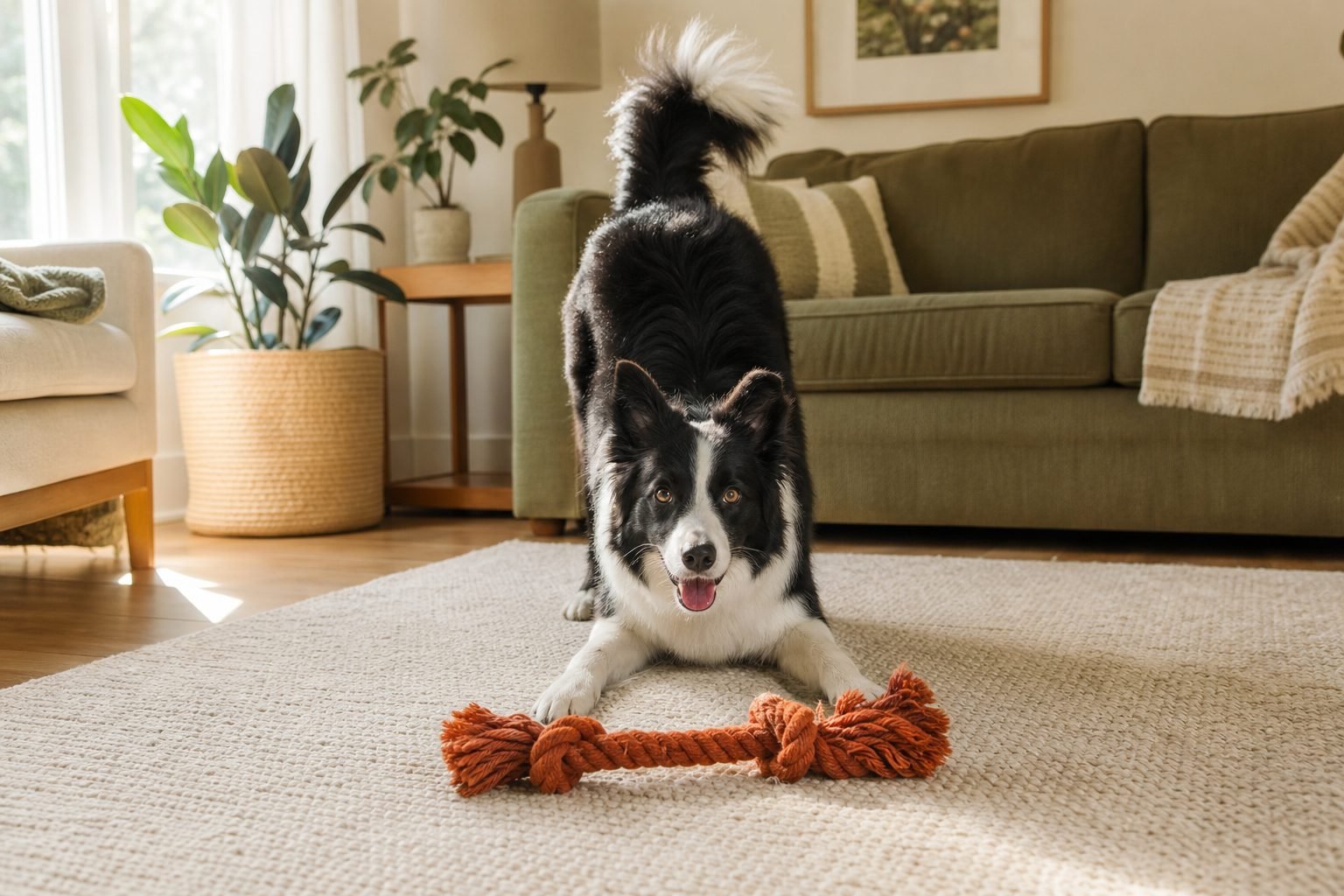
Choosing the Right Surface and Space
Texture matters more than space. A shag rug hides kibble too well and gets greasy. Short pile carpet, a patio, or a lawn cut short are the easy winners.
Indoors, clear the room of anything breakable. A dog hunting food moves fast and does not look where it steps.
Watch out: never scatter on a surface treated with lawn chemicals, and skip the scatter entirely in areas where other dogs toilet.
Starting Small and Building Up
Begin with one meal a week, then move to two or three. Some dogs catch on in seconds. Others stare at you like you have lost your mind.
For hesitant dogs, scatter a few pieces in plain sight and let them watch you toss the rest. Confidence builds fast once the nose takes over.
A practical progression looks like this:
- Week one: scatter five to ten pieces on a hard floor in a single room while you stand still. Session length: under one minute. Supervise the whole time.
- Week two: scatter half the meal across a larger area, still indoors, and add one piece of furniture as an obstacle. Session length: two to three minutes.
- Week three: move to short grass or a snuffle mat and scatter the full meal. Session length: three to five minutes for most dogs.
- Ongoing: rotate surfaces and difficulty. A dog that finishes in under a minute every time is ready for a harder setup, such as a muffin tin or a frozen snuffle mat.
Supervision matters at every stage. Stay within a few feet for the first month, watch for gulping or guarding, and pick up any kibble the dog leaves behind so it does not attract pests.
If your dog loses interest after a minute, the scatter is probably too hard or the food value too low.
Here is the progression the article lays out, from first scatter to full meal.
| Stage | What to do | Session length |
|---|---|---|
| Week one | Scatter five to ten pieces on a hard floor, one room | Under one minute |
| Week two | Scatter half the meal indoors, add one furniture obstacle | Two to three minutes |
| Week three | Move to short grass or a snuffle mat, scatter full meal | Three to five minutes |
| Ongoing | Rotate surfaces and difficulty, e.g. muffin tin or frozen snuffle mat | Not stated |
Scatter Feeding Benefits for Dogs: What It Actually Does
The clearest benefit is brain work. Sniffing and searching use a dog's natural foraging behavior, and that mental stimulation tires a dog out in a way a walk sometimes cannot.
Many owners find that a scattered meal takes far longer than a bowl meal. That extra time is the point: a busy mouth and a busy nose leave less room for boredom.
If your dog needs more outlets for that energy, our guide to herding ball play for Corgis pairs well with a scatter routine.
Where the Health Claims Hold Up and Where They Don't
Slowing fast eating is a real, observable benefit. A dog that inhales from a bowl cannot gulp scattered kibble at the same rate.
The bloat claims deserve caution. Scatter feeding may slow eating, but no feeding method is proven to prevent bloat, and the American Kennel Club's guidance on bloat treats it as a medical emergency requiring a vet, not a feeding tweak.
Weight loss claims are also shaky on their own. Scatter feeding does not add meaningful calorie burn on its own, so portion control still matters.
Scatter Feeding Games for Dogs That Keep Mealtime Interesting
Vary the game or the novelty wears off. These four formats cover most dogs:
- The classic toss: kibble flicked across short grass.
- The muffin tin: kibble dropped into a muffin pan, then frozen with a little water.
- The snuffle mat: fabric strips that trap kibble for deep nose work.
- The lick mat: soft food spread across a textured silicone lick mat for a calmer, slower treat session.
Rotate two or three formats a week. Same food, different puzzle.
Slow Feeding Ideas for Dogs When Scattering Isn't Practical
Rain, apartment living, or a dog that eats grass clippings all make scattering awkward. Bowl-based slow feeders solve that.
A maze-style slow feeder dog bowl makes the dog work around raised sections to reach its food, which encourages slower eating without the mess of a scatter. Its silicone construction is easy to rinse.

For wet food or a calming wind-down, a lick mat does the same job in a smaller footprint.
Safety, Suitability, and Multi-Dog Households
Scatter feeding suits many healthy adult dogs. Its suitability for puppies, seniors with joint pain, and flat-faced breeds depends on the individual dog and should be checked with a veterinarian.
A dog-by-dog check is more useful than a general rule. Run through this list before your first scatter:
- Resource guarding: if your dog guards food, toys, or resting spots, skip scatter feeding in shared spaces. Scattered food on open ground is harder to defend than a bowl, and some dogs respond by snapping at anyone who approaches. Work with a vet behaviorist before trying it.
- Food allergies or sensitivities: scatter only the food your dog already eats safely. Do not use scatter feeding as a way to introduce new proteins or treats, because pieces on the floor are easy to lose track of and hard to remove if a reaction starts.
- Mobility limitations: dogs with arthritis, hip dysplasia, or recent surgery may struggle to bend and search on slippery floors. Use a snuffle mat on a non-slip rug, or scatter on a raised surface if your dog can reach it comfortably.
- Vision loss: a blind or low-vision dog can still forage, but keep the scatter in a small, familiar area and use strongly scented food. Avoid rearranging furniture before a session.
- Dogs that eat unsafe objects: if your dog picks up rocks, mulch, or trash, scatter only on a clean, bare floor or a snuffle mat. Outdoors, inspect the area first and skip it if you cannot control what is on the ground.
Multi-dog homes need separation. Feed each dog in its own space or scatter in separate rooms, because food on open ground invites guarding. A common pattern is to scatter for one dog while the other waits behind a baby gate, then swap. If two dogs cannot be separated safely, use snuffle mats or slow feeders in separate crates instead of scattering.
Watch out: if your dog guards food or snaps when approached while eating, skip scatter feeding in shared spaces and talk to a vet behaviorist first.
A double feeder with separate stainless steel bowls keeps everyday meals organized when scattering is not in use.

Portion Control: Keeping Scatter Feeding From Adding Calories
Scatter feeding fails when owners treat it as a bonus instead of a meal. The fix is simple: measure first, scatter second.
- Scoop the daily ration into one container each morning.
- Pull the scattered portion from that container.
- Never top up the bowl to "make up" for lost kibble.
An automatic feeder helps here. It dispenses a set amount, so the scatter portion stays honest.

Pick Your Bowl and Start Scattering Tonight
The barrier to entry is a handful of kibble and two minutes. Try one scattered meal this week and watch how much longer your dog stays busy afterward.
At HomeBodyPet, we hand-select and pet-test durable essentials, including slow feeders, and deliver them straight to you without retail markups. As a small, family-run operation, we aim to offer products we trust for our own pets.
Get started with HomeBodyPet and turn mealtime into the best part of your dog's day.
Scatter feeding rewards a dog for doing what comes naturally. If you want a feeding setup that supports that instinct without the mess, our slow feeders and lick mats are built for daily use. Shop the HomeBodyPet feeding collection and find the right fit for your dog's size and eating style.
Frequently Asked Questions
Is scatter feeding good for dogs?
For most healthy dogs, yes. Scatter feeding taps into natural foraging behavior, adds sniffing-based mental stimulation, and can slow down a dog that inhales meals. It is not a cure-all: it will not fix resource guarding, and it adds little for dogs already calm and well-exercised. Think of it as one tool in a rotation rather than a replacement for walks, training, and proper portions. Dogs with medical conditions or restrictive diets should get a vet's sign-off first.
How long should a dog spend scatter feeding?
Most dogs finish a scattered meal in 5 to 15 minutes, depending on the surface and how finely you spread the food. Grass and gravel take longer than a bare floor. If your dog cleans up in under two minutes, spread the kibble wider or use smaller pieces. If food is still sitting there after 20 minutes, especially outdoors, pick it up so it does not attract pests or spoil.
Can scatter feeding make resource guarding worse?
It can if you scatter food where multiple dogs compete for the same pieces, or if you scatter near a dog that already guards food or space. For a guarding dog, feed separately behind a closed door or gate and scatter in a defined area the dog has to itself. Watch for stiffening, hovering, or snapping and stop immediately if you see them. A certified behavior consultant can help if guarding is already established.
Is scatter feeding safe for puppies?
It can be, with adjustments. Use small, appropriately sized kibble, scatter on a clean, easy-to-clean surface indoors, and supervise the whole time. Puppies explore with their mouths, so avoid scattering on lawns treated with chemicals or near small swallowable objects. Keep sessions short, since puppy attention spans are brief, and count scattered food toward the daily ration rather than adding extra meals.

